
The quick growth of Large Language Models (LLMs) has stretched modern data centers to their hardware edges. While GPU processing power keeps rising sharply, the links that move data between these chips have turned into a key slowdown in performance. If you run an AI setup, then you understand that the “memory wall” and “communication wall” are not just ideas anymore but real daily issues. Here, the fresh optical chip tech comes in, aiming to swap out electron-based slowdowns with light-fast work.
Why Traditional Silicon Chips Struggle with Generative AI Demands?
Standard silicon setups depend on copper lines and electric signals to shift data, and as Generative AI models reach billions of parameters, these electric routes face strong physical pushback. You might see that when you grow your groups, the delay jumps up fast because electrons create warmth and drop signal quality over length.
Physical limits of electrical signaling
Electric signals face heavy loss when speeds rise to handle more bandwidth, and in a usual AI training spot, standard copper links fight to keep data solid without huge power pushes, which caps the full flow of the system.
Massive heat generation in AI clusters
When countless electrons flow through silicon and copper at fast paces, they produce huge heat amounts, and this warmth needs tricky cooling setups that often use as much power as the computing does, leading to a green problem for today’s packed data centers.
Bandwidth bottlenecks in GPU interconnects
Generative AI calls for big spread-out work across thousands of GPUs, but standard silicon links fail to deliver the needed “east-west” traffic paces, so your costly GPUs end up waiting while data bits crawl through jammed electric paths.
The Revolutionary Mechanics of New Optical Chip Technology
Optical chips, or photonic integrated circuits, rely on photons rather than electrons to handle and send info, and by using the photoelectric effect—which turns light strength into current or applies wave breakdown—these chips shift data at light speed. This change marks a basic shift in how your AI gear views space and pace.
Light-speed data transmission efficiency
Photons lack weight or charge, so they move through guides with nearly no blockage, which means much higher data flows over greater spans than electric signals offer, keeping your AI training points in tight sync.
Significant reduction in power consumption
Since light-speed shifts avoid the drag in copper wires, the energy to carry one bit of data drops to a small part of what standard chips need, and this lets you put more of your power plan toward real AI work instead of data shifts.
Parallel processing capabilities for AI workloads
Optical tech backs Wavelength Division Multiplexing (WDM), letting several data flows run through one fiber at once using different light shades, and this built-in spread-out fit matches the build needs of Generative AI just right.
How DEEPETCH Optical Solutions Bridge the AI Performance Gap?
In this tough setting, you require a teammate who links theory to real-world steady supply, and DEEPETCH leads this move by focusing on fast optical parts and liquid cooling fixes made for the AI time. Started in 2019, they have hit big output of 400G and 800G modules, helping over 1,560 clients worldwide. When you pick their tech, you gain more than a part; you join a network from Shenzhen to Hong Kong that keeps your AI Industry setup leading with sharp 1.6T research.
Scalable 400G and 800G optical modules
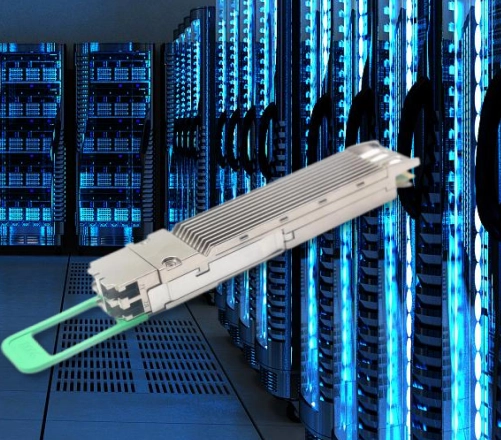
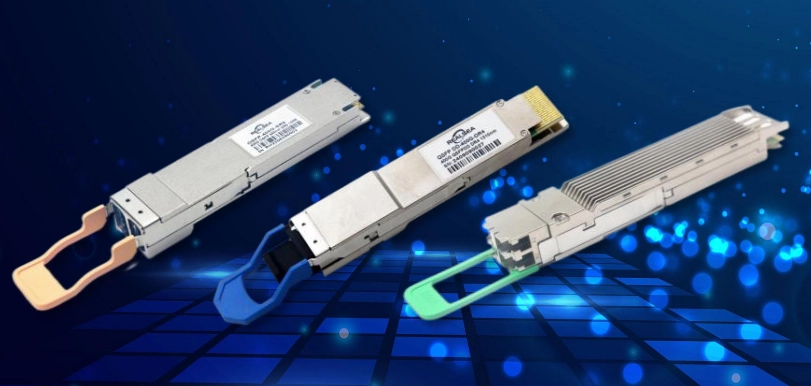
You can use DEEPETCH’s large-made 400G and 800G QSFP-DD and OSFP modules to right away break bandwidth blocks in your setup, and these parts apply strong VCSEL and PIN light catchers to hold steady, fast data paths.
Future-ready 1.6T high-speed connectivity
As your AI models change, your gear must match, so DEEPETCH pushes forward on 1.6T optical module work, giving a plain path for your next big computing and cloud boosts.
Integrated liquid cooling compatibility
To fight heat issues in thick AI shelves, you can draw on special optical fixes built for liquid cooling spots, which keep your optical chips at best work even under full loads without heat slowdown risks.
The IDM Advantage in Optical Chip Manufacturing for AI
Your AI setup’s steadiness hinges on chip build ways, and the Integrated Device Manufacturer (IDM) style stands out for tricky items like optical sensors and fast modules. Unlike the Fabless way that hands off making, the IDM path offers a firmer supply line and closer ties between plan and build.
Complete design and fabrication integration
By holding the full flow from base pick—such as monocrystalline silicon or GaAs—to end wrap-up, an IDM like DEEPETCH makes sure material traits fit high-pace AI signals perfectly.
Strict quality control across all stages
Sourcing from an IDM brings tough test steps that check heat, wet, and shake hold, which matters for AI chips running under hard strain in round-the-clock data spots.
Rapid response to custom AI requirements
The IDM style speeds up changes, so if your AI build needs a special swap or unique sensor mix—like joining heat and gas check for battery guard in UPS units—the make flow can shift fast.
Why AI Data Centers Must Upgrade to New Optical Interconnects?
Sticking to old electric links means higher costs and flat output, and as you check your data center’s return, moving to optical chips turns into a money must. Handling big data sets with less delay links straight to edge gains in the AI field.
Faster training times for Large Language Models
Speed to market rules in AI, and with fast optical modules, you cut the wait time for GPUs on data, which can trim weeks from the train plan for a new base model.
Lower Total Cost of Ownership for operators
Though the start cost for optical tech may look steep, the cuts in power and cooling add up big, and over a data center’s life, these work gains drop your run costs a lot.
Enhanced reliability in 24/7 AI computing
Optical fibers shrug off electromagnetic interference (EMI), so in a busy data center with thousands of electric tools, this block keeps your data clean and cuts the need for slow fix and re-train work.
DEEPETCH Solutions for the Global AI Industry Landscape
World need for AI power keeps pushing, and you need a supplier who ships at big scale, whether for a private cloud or public big computing center, since high-work parts form the core of your plan.
Specialized products for AI computing centers
From Active Optical Cables (AOC) to fast DACs, the line fits the exact reach and power needs of AI shelves, and you can get fixes that back rules like Ethernet and InfiniBand, common in AI nets.
Global supply chain and stock availability
In a field hit by lacks, reaching Chips in Stock gives a huge edge, so you hold project times by teaming with a group that built a strong net across main world points.
Proven track record with 1500+ global clients
AI field wins come from trust, and picking a teammate with wide world reach means you draw on years of skill in varied uses from home gear to self-drive and factory auto.
FAQ
Q1: What is the main difference between an optical chip and a silicon chip?
A: An optical chip uses light (photons) to transmit and process data, whereas a traditional silicon chip uses electricity (electrons), allowing for much higher speeds and lower heat.
Q2: How does 800G technology benefit Generative AI training?
A: 800G modules double the bandwidth of previous 400G standards, allowing for faster data exchange between GPUs and reducing the overall latency of large-scale model training.
Q3: Why is the IDM model important for AI chip reliability?
A: The IDM model means the company handles both design and manufacturing, leading to better quality control, optimized material performance, and a more stable