
You’re racing to qualify a MEMS pressure sensor or a LiDAR module, and everything looks perfect until anodic bonding yields crash below 70%. The silent killer? That “cheap” borosilicate or soda-lime cover plate you chose. In advanced packaging and MEMS, overlay accuracy has become the new bottleneck. If you need ≤ ±0.5 µm alignment, only one material survives real production: high-purity fused quartz. This guide shows exactly why regular glass destroys your yields and why professionals worldwide now standardize on quartz—especially the ready-to-ship solutions from DEEPETCH.
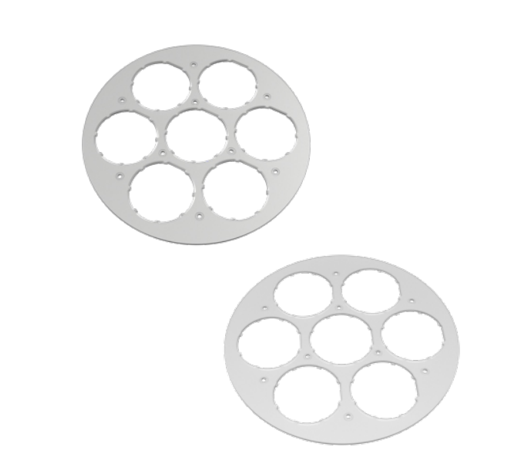
What is a Cover Plate and Overlay Accuracy?
Cover plates seal MEMS accelerometers, CMOS image sensors, pressure sensors, microfluidics, and silicon-photonics chips. They protect cavities and enable hermetic packaging via anodic or fusion bonding.
Even ±2 µm shift causes parasitic capacitance, optical crosstalk, or hermeticity failure. In automotive TPMS or DPF differential pressure sensors, this directly violates AEC-Q100 and spikes field returns.
Material Comparison: Regular Glass vs Fused Quartz
When overlay accuracy is non-negotiable, the material you choose for your cover plate decides everything. Here are the five decisive factors that make regular glass (Borofloat 33, D263T, soda-lime, AF32) fail and fused quartz win every time.
Thermal Expansion Match with Silicon
- Silicon CTE: 2.6–3.2 ppm/°C
- Regular glass: 3.3–9.0 ppm/°C → creates huge thermal stress, bow up to 100 µm after 400 °C bonding
- Fused quartz: 0.55 ppm/°C → virtually perfect match, warp <5 µm even after repeated high-temperature cycles
Surface Flatness & Total Thickness Variation (TTV)
- Regular glass: typical TTV 3–10 µm → cavity depth and TGV alignment shift 2–8 µm
- Fused quartz: TTV ≤0.5 µm (DEEPETCH standard) → guarantees sub-micron overlay and uniform bonding interface
Purity & Contamination Risk
- Regular glass: contains Na⁺, K⁺, Al³⁺ → outgassing and ionic contamination that drift sensor baselines
- Fused quartz: 99.999%+ SiO₂, zero alkali metals → cleanroom-safe, perfect for bio-sensors and high-reliability MEMS
Thermal Stability & Process Temperature
- Regular glass: softens ~600 °C → warps during plasma etching, reflow, or high-temp annealing
- Fused quartz: stable >1700 °C → survives every aggressive process step without deformation
Electrical & Optical Performance
- Regular glass dielectric constant 4.6–7.5 → higher parasitic capacitance
- Quartz 3.8 + excellent UV–NIR transmission (185 nm–2.5 µm) → lower noise and ideal for CIS, LiDAR, and photodetectors
| Property | Regular Glass (BF33, Soda-lime) | Fused Quartz (DEEPETCH Grade) | Impact on Overlay & Yield |
| CTE (ppm/°C) | 3.3 – 9.0 | 0.55 | Quartz eliminates stress |
| TTV (total thickness var.) | 3 – 10 µm | ≤ 0.5 µm | Quartz wins sub-micron alignment |
| Max process temperature | ~600 °C | > 1700 °C | Quartz survives all steps |
| Alkali content | High (Na, K) | Zero | Quartz prevents drift |
| Dielectric constant | 4.6 – 7.5 | 3.8 | Quartz reduces parasitics |
| Anodic bonding yield | 70 – 85 % | 98 – 99.5 % | Quartz = production-ready |
Regular glass looks cheap on the purchase order but destroys overlay accuracy and bonding yield the moment temperature or precision is involved. Fused quartz is the only material that behaves like an extension of the silicon wafer itself.
Cost Analysis – Is Quartz Really “Expensive”?
You’re crunching numbers, eyeing regular glass’s 1x price tag against quartz’s 3-6x premium. But zoom out to total cost of ownership (CoO), and the math flips. Upfront, yes—glass saves on a 12″ wafer run. Yet, its 10-20% yield hit from misalignment rework adds 15-30% to your bill, per fab data on CMOS-compatible processes.
Quartz? It slashes scrap in high-volume SoC or memory packaging, where economies of scale mirror silicon’s abundance (Earth’s second-most element). For a 110MW-equivalent sensor line, like high-capacity PECVD tubes handling 156-162mm slices, quartz’s flatness cuts calibration cycles by 20%, amortizing costs in 1-2 months. Factor in zero delamination claims under JEDEC standards (MSL, temp cycling), and your LCOE drops 30%—much like single-crystal silicon’s 24% PV efficiency edge over polycrystal’s 18-20%. In IDM flows for custom MOSFETs or IGBTs, quartz’s reliability compounds savings, making it the smart bet for scaling.
When You Can Still Use Regular Glass?
Not every project demands perfection, and that’s where regular glass fits without drama. If you’re building low-end consumer humidity sensors—say, capacitive types like SHT series for smart homes—glass’s visible-light transmission and 1x cost suffice, as long as hermeticity isn’t critical. Ditto for non-bonded mechanical shields in basic accelerometers, where ±5 µm tolerance won’t tank performance.
Or picture prototyping VOC gas sensors for air quality: Glass handles the MOX adsorption without outgassing woes in ambient conditions. But cross into automotive (TPMS, crankcase ventilation) or medical (pH/ISFET chips), and glass’s warp risks AEC-Q100 failure. Even then, hybrid approaches—like glass for rough drafts, quartz for qual—keep budgets balanced. Just know the line: Once optical or RF precision calls, glass becomes a liability.
Why DEEPETCH Quartz Cover Plates Are the Industry Choice?
When precision, reliability, and speed matter most, experienced fabs and design houses no longer shop around—they go straight to DEEPETCH. As a true IDM leader in deep silicon etching and advanced packaging, DEEPETCH brings the same rigor to high-purity fused quartz that they apply to silicon, delivering cover plates that don’t just meet industry specs but redefine what’s possible in MEMS and sensor packaging.
Ready-to-Ship Inventory & Ultra-Tight Specifications
DEEPETCH keeps 4″–8″ quartz wafers and cover plates in stock year-round. Thicknesses range from 200 µm to 1000 µm, with guaranteed TTV ≤ 0.5 µm, warp ≤ 5 µm, and surface roughness Ra < 0.5 nm. Whether you need blanks for immediate anodic bonding trials in pressure or humidity sensors, or pre-etched caps ready for same-week integration, standard items ship in 7–14 days.
Full Customization Under One Roof
Need recessed cavities, through-quartz-vias (TGV), metal patterning, or optical-grade AR coatings? DEEPETCH handles every step in-house—etching, thin-film deposition, dicing, and final inspection—all certified. Their synthetic fused silica and natural quartz options deliver zero-alkali purity and full UV–NIR transmission, making them the first choice for automotive fuel-evaporation sensors, urea pressure sensors, battery-pack monitors, LiDAR windows, and medical-grade biosensors that operate reliably from –40 °C to +125 °C.
Trusted by Tier-1 Players Worldwide
You’ve weighed the evidence: Regular glass might tempt with savings, but its CTE woes, warping, and contamination quietly demolish your overlay accuracy, yields, and device longevity in MEMS and advanced packaging. Fused quartz, with its unmatched stability and purity, unlocks the sub-micron precision you need for reliable anodic bonds, hermetic seals, and high-performance sensors—empowering everything from LiDAR to biomolecular chips.
Don’t let material shortcuts derail your next breakthrough. Reach out to DEEPETCH for free quartz cover plate samples, a custom quote in 24 hours, or their whitepaper on quartz vs. glass in wafer bonding. Elevate your fab game—your overlays (and bottom line) will thank you.
FAQ
Q1: What makes fused quartz better than borosilicate glass for anodic bonding in MEMS?
A: Fused quartz’s ultra-low CTE (0.55 ppm/°C) matches silicon perfectly, minimizing thermal stress and enabling uniform bonding at lower voltages, while borosilicate’s 3.3 ppm/°C causes warping and delamination risks.
Q2: How does overlay accuracy affect sensor performance in automotive applications?
A: Poor overlay (±2 µm or more) increases parasitic capacitance and signal drift in pressure or position sensors, failing standards like AEC-Q100 and reducing reliability in TPMS or EGR systems.
Q3: Can regular glass handle high-temperature processes in advanced packaging?
A: No—regular glass softens around 600°C, leading to bow and misalignment in reflow or etching steps, unlike quartz’s >1700°C stability for CMOS-compatible workflows.