
In the fast-moving world of AI and cloud computing, traffic inside data centers has simply exploded. A single large-scale model training job can push multiple petabytes across the fabric in days, not months. Suddenly, every watt, every port, and every fiber counts more than ever. While SFP+ modules carried the industry faithfully through the 10G and early 25G era, the leap to 400G and 800G has made the choice crystal clear: modern facilities overwhelmingly pick QSFP-DD because it delivers far higher density, better power numbers, genuine future-proofing, and noticeably lower total cost over the lifetime of the cluster.
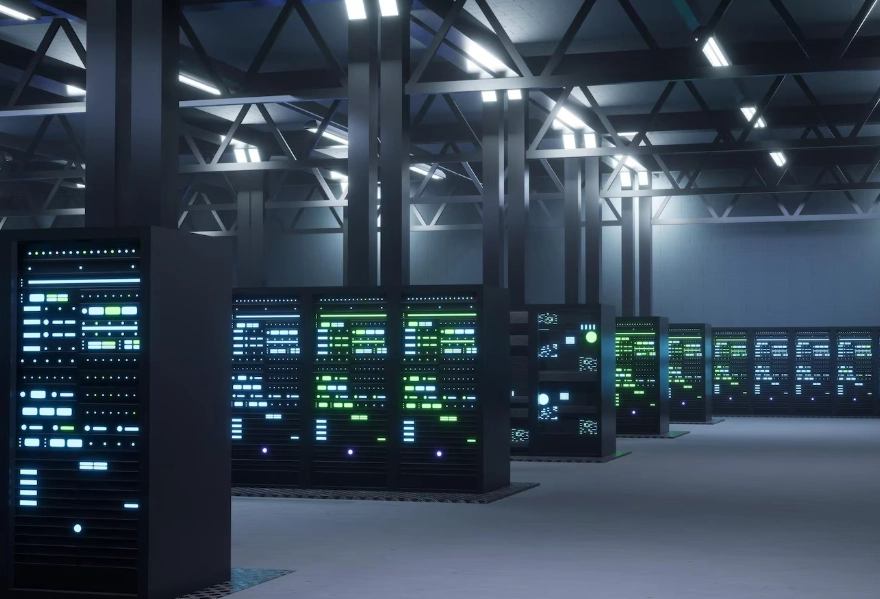
Evolution of Optical Modules in Data Centers
The story of optical transceivers in data centers is really a story of ever-growing bandwidth hunger. Ten years ago, most leaf-spine links ran at 10G or 25G, and SFP+ was cheap, plentiful, and perfectly adequate. Yet as soon as hyperscalers and AI companies started ordering tens of thousands of 400G ports, the physical limits of the tiny SFP+ package became painfully obvious.
Historical shift from SFP+ to advanced form factors
Because SFP+ only carries one electrical lane, a full 400G connection needs sixteen separate fibers and sixteen switch ports. QSFP-DD, on the other hand, squeezes eight high-speed lanes into the same width as the old QSFP28 module. One single port suddenly gives you 400G today or 800G tomorrow with just a module swap.
Rising bandwidth demands driving QSFP-DD adoption
Today’s GPU clusters routinely move more than 100 Tb/s east-west. Only QSFP-DD (and its close cousin OSFP) can keep up without forcing a complete hardware refresh every couple of years. Even better, QSFP-DD remains mechanically and electrically compatible with earlier QSFP28 and QSFP56 optics, so migration feels smooth instead of brutal.
DEEPETCH’s contributions to optical semiconductor innovation
Few companies control the entire stack from silicon design to finished transceiver, but that vertical integration is exactly what lets some manufacturers ship better-performing, lower-cost modules. Founded in 2019, DEEPETCH Semicon quickly reached volume production of 400G and 800G QSFP-DD transceivers, including liquid-cooled versions that are gaining traction in the largest AI training farms. Their in-house DSPs, drivers, and ceramic packaging give customers noticeably cooler operation and 15-25 % lower power draw than many competing offerings. Thousands of data center operators have already made the switch. You can explore the full lineup at DEEPETCH.
Why Data Centers Prefer QSFP-DD Over SFP+
Ultimately, the decision comes down to practical, day-to-day concerns rather than theoretical maximum speed.

Scalability for future-proof network infrastructure
When you install QSFP-DD ports today, the same cage accepts 400G now and will accept 800G or even 1.6T later without touching the switch chassis. That single feature has saved the industry billions in unnecessary upgrades.
Cost-effectiveness in high-volume deployments
Fewer fibers to buy, terminate, and manage, fewer patch panels, fewer switch ports, and dramatically lower both capital and operational expense. Many operators report that moving a 400G spine layer from sixteen SFP+ breakout cables to a pair of QSFP-DD fibers cuts overall cabling cost by 60 % or more.
Enhanced reliability for mission-critical operations
Every extra connector represents another possible point of failure. Consolidating sixteen fibers into one rugged QSFP-DD connector reduces insertion loss, lowers reflection, and makes troubleshooting much faster. In AI factories where one hour of downtime can cost millions, that reliability edge matters enormously.
DEEPETCH’s High-Performance QSFP-DD Optical Modules
Choosing the right supplier turns paper advantages into real savings you can measure on the power bill.
Advanced ceramic packaging for superior thermal conductivity
DEEPETCH uses proprietary ceramic substrates with direct-bond copper traces that pull heat away from the DSP and laser drivers far more effectively than ordinary PCB designs. The result is rock-solid performance at 15 W even in hot-running 800G mode.
Customizable solutions supporting 400G and beyond speeds
Whether you need standard 400G-DR4, 800G-DR8, 2×400G-FR4 breakout, or liquid-cooled 800G for the densest racks, DEEPETCH offers full OEM/ODM/JDM service with surprisingly short lead times. Because they are a true IDM, changes you request actually make it into silicon quickly.
Proven compatibility with major data center platforms
Real-world testing across NVIDIA, AMD, Intel, and Broadcom silicon shows bit-error rates well below 1E-15 and full compliance with every relevant MSA. Tens of thousands of DEEPETCH 400G and 800G QSFP-DD modules already run in production AI clusters worldwide.
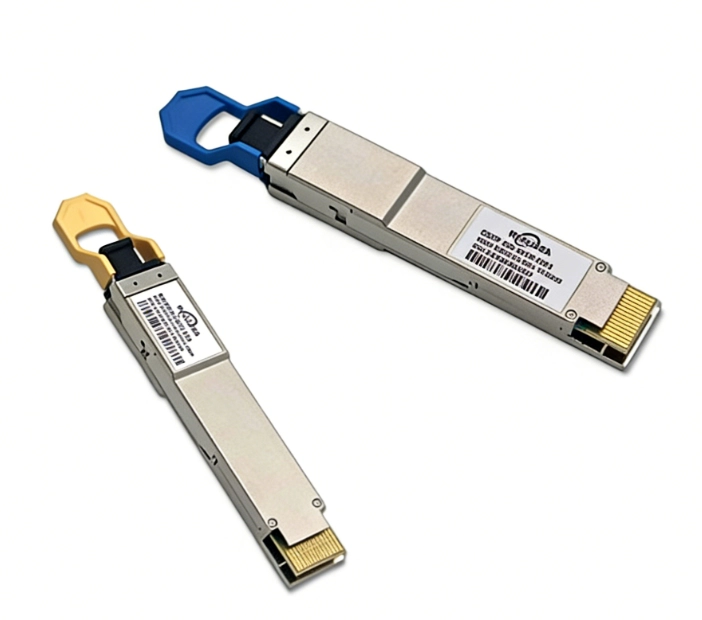
Integrating DEEPETCH Products into Your Data Center
Moving away from older SFP+ infrastructure does not have to be painful or risky.
Seamless migration strategies from SFP+ setups
Many operators start by upgrading only the spine switches to 400G or 800G QSFP-DD while leaves stay on 100G or 200G for another budget cycle. Traffic aggregates naturally, and training jobs keep running without interruption.
Bulk procurement benefits and IDM customization options
Since DEEPETCH controls wafer fab, assembly, and test under one roof, volume pricing stays aggressive even when you need non-standard reach, special wavelengths, or custom firmware. Long-term agreements routinely lock in pricing well below market average. More details on their IDM capabilities are available.
Case studies showcasing performance gains with DEEPETCH modules
One large public cloud provider swapped third-party 400G optics for DEEPETCH equivalents and cut cluster power by 680 kW while gaining 11 % higher training throughput. An AI research lab standardized on DEEPETCH liquid-cooled 800G-DR8 modules and reduced their total interconnect spend by 43 % compared with the previous generation.
FAQ
Q1: Can QSFP-DD ports still run my existing 40G or 100G QSFP28 modules?
A: Yes, they can. QSFP-DD cages work perfectly with older QSFP28 and QSFP56 modules. You just plug them in, and everything runs smoothly. This makes it super easy to mix old and new gear while you upgrade step by step.
Q2: Are 800G QSFP-DD modules mature enough for production today?
A: They sure are. Big factories started shipping tons of 800G-DR8 and 800G-SR8 modules back in 2024. Right now, many huge AI clusters already use tens of thousands of these ports every day, and they run with almost no trouble at all.
Q3: How much power do you really save by moving from SFP+ breakout cables to native QSFP-DD?
A: You save a lot. A normal 400G link built with four 100G SFP+ modules eats about 16 W. Switch to one single QSFP-DD module and it drops to only 10–12 W. Even better, the liquid-cooled 800G versions from DEEPETCH stay under 15 W while pushing twice the speed. Your electric bill thanks you every month.
Q4: Do QSFP-DD modules still give me the same reach options I had with SFP+?
A: Yes, and sometimes even more. You can still get DR4 for 500 m, FR4 for 2 km, LR4 for 10 km, plus many other choices. Whatever distance you needed before, QSFP-DD has you covered today.