
The push for 800G is now a real challenge for those handling dense clusters or AI-based setups. As you plan for 2026, picking between OSFP and QSFP-DD affects not only your current port count but also your ongoing heat control approach. This change comes from the huge need for bandwidth in large language models and the quick shift to 1.6T speeds. You must understand which gear will keep your racks from overheating without requiring a full replacement of your current switches. If you face this tricky area, teaming up with a specialist like DEEPETCH, an expert in 400G/800G high-speed optical modules and liquid cooling options, can ease the move. Founded in 2019, they have ramped up output for worldwide data centers and are working hard on 1.6T development to help customers lead the way.
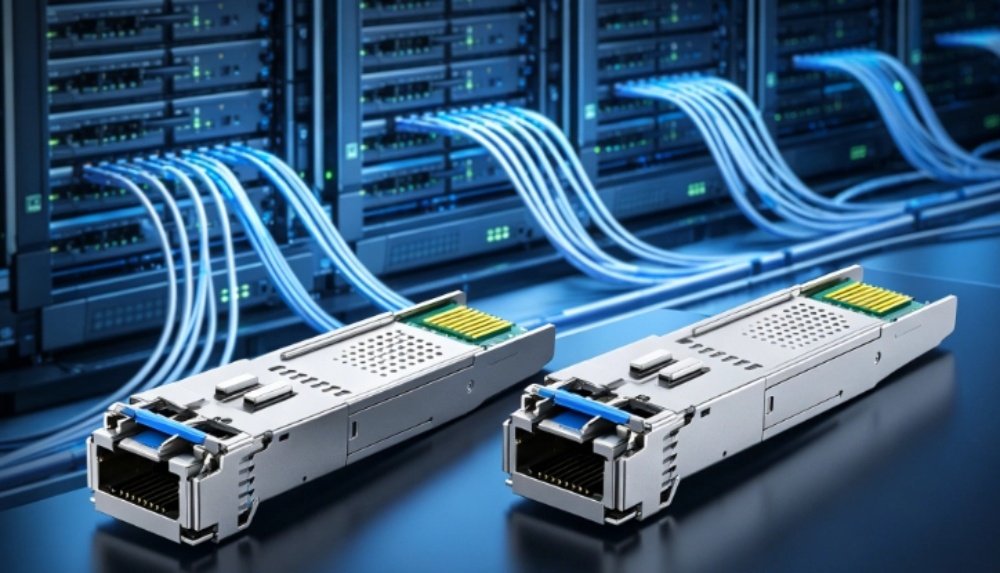
Data centers face limits where 400G fails to match the vast number of parameters in today’s AI training. You probably notice your existing bandwidth struggling as GPU groups grow, so moving to 800G becomes a must rather than an optional step.
AI training now demands syncing across thousands of nodes, leading to heavy East-West traffic. You cannot simply add extra cables. Instead, you require wider channels to avoid latency that harms your model’s results. This growth pushes the need for stronger connections in busy environments.
Shifting to 800G means changing how signals are handled and organized. It goes beyond just increasing speed. Moreover, it involves keeping signal quality intact on the PCB as frequencies rise steadily. These updates ensure reliable performance in demanding setups.
By 2026, the 800G setup will reach full maturity. As a result, part prices will fall, and software-defined networking tools will prepare for 1.6T. This marks the time when early risks disappear. Thus, adoption becomes straightforward for many users.
The Octal Small Form-factor Pluggable (OSFP) suits those concerned about power costs and heat removal. Its somewhat bigger size compared to earlier types allows space for better heat sinks, which proves vital when transceivers draw 15W or higher.
Heat harms any optical part, and OSFP tackles this with a greater surface for cooling. This provides extra room for temperature control. Consequently, your fans run at lower speeds to prevent a switch from getting too hot. Such features support steady operation in packed systems.
OSFP modules typically include their own built-in fins rather than depending on the switch’s cooling. This setup draws heat from key parts like lasers and internal Monocrystalline silicon bases at the chip’s core. As a result, it improves overall airflow and reduces stress on components.
If you intend to use your equipment for over three years, OSFP offers a more secure option for 1.6T. It handles the energy needs that future speeds will require. Therefore, it supports long-term plans without frequent changes.
In high-density modules under heavy load, the packaging plays a key role. A dedicated Butterfly package keeps inner parts steady and shields them from heat-related swelling, which DEEPETCH emphasizes in premium production. This approach boosts durability in tough conditions.
If you have a large setup with current QSFP gear, the Double Density (DD) variant seems like a logical next step. It offers a straightforward path that allows inserting 400G or even 100G modules into the same spots while reaching 800G levels.
The main benefit is avoiding a complete redesign of your rack setup. You achieve 36 ports in a 1U switch. Plus, you can combine old modules without costly adapters or special cables. This flexibility saves time and effort in upgrades.
The drawback lies in the limited space, which causes quick heating. Therefore, you must plan airflow carefully. Otherwise, you could face reduced speeds from overheating transceivers. Proper design helps maintain performance in tight spaces.
For a limited budget in the coming year, QSFP-DD often costs less to start with due to its well-developed ecosystem. You avoid the extra fees tied to newer, bulkier designs. However, consider how this affects overall expenses over time.
The strength of these small modules depends on silicon quality. Pure monocrystalline silicon delivers improved carrier movement and heat resistance, essential for packing high power into a compact QSFP-DD unit. This foundation ensures reliable function under pressure.
Selecting between these options involves more than the connector; it concerns the basic rules of your data center. You balance the number of ports on a panel with the cooling investment you accept, whether air or liquid-based.
As transceivers advance to 1.6T, energy use rises sharply. You may see modules needing 20W to 30W soon, which makes standard air cooling hard for full switches. Thus, new methods become necessary for sustained efficiency.
Faster speeds bring more electrical interference. Modules must meet tough EMI and ESD standards. They often use advanced coatings or shields to preserve clear signals over copper paths. These steps keep connections stable and noise-free.
Inserting and removing modules should not risk damage. The cage and latch design must endure repeated handling without losing connection strength. This reliability supports daily operations in active networks.
800G success depends on solid DFM knowledge. DEEPETCH applies its IDM approach and broad EMS background to build every board for survival in nonstop supercomputing settings. Their methods ensure high quality and adaptability.
Notably, 800G transceiver tech is spreading to other advanced fields. The high-frequency handling for fiber optics now supports new satellite and defense systems.
Looking at 6G, hardware must manage Terahertz levels. This calls for exact PCB layouts and material choices once limited to test labs. Such precision drives progress in wireless tech.
Space lacks air for heat transfer, so cooling matters more than in data centers. Dependable designs use special bases to avoid bending and maintain firmness over time. These features enable long missions without failure.
DEEPETCH supplies strong TR transceiver chips and modules for satellite links and radar. They draw on high-speed basics to hold signals steady in tough electromagnetic settings. This extends their expertise beyond networking.
Links between commercial networks and aerospace grow stronger. The low-loss power and solid heat handling in an 800G OSFP module match needs for modern UAV controls. This overlap fosters shared innovations across sectors.
Before approving a big hardware purchase, review your three-year strategy. For a large AI training setup, OSFP’s heat advantages may surpass QSFP-DD’s fit with current systems.
QSFP-DD works well for regular cloud tasks where port count matters most. However, for demanding jobs like AI or fast trading, OSFP’s added cooling room justifies the cost. Select based on your main needs to optimize results.
Standard parts may not suit your power or space limits. Customized EMS lets you adjust hardware to fit your setup precisely. This tailored support improves fit and function.
Picking a partner goes beyond price; it involves getting help during tough spots. DEEPETCH’s emphasis on customized EMS and high-speed solutions gives the adaptability that stiff suppliers often miss. Their support builds lasting ties.
The 800G change is only the start. Whether updating a small server area or expanding a worldwide satellite grid, keeping up with hardware trends prevents outdated buys. Stay aware to make smart choices.
Q1: Can I plug a QSFP-DD module into an OSFP slot?
A: No, the physical dimensions and connector pins are different, though you can use specialized adapter cables to connect switches that use different form factors.
Q2: Which form factor is better for liquid cooling?
A: Both can be adapted for liquid cooling, but OSFP’s larger surface area and integrated fins often make it easier to implement efficient immersion or cold-plate solutions.
Q3: Is OSFP more expensive than QSFP-DD?
A: Generally, OSFP modules can be slightly more expensive due to the integrated heat sink and newer ecosystem, but the total cost of ownership might be lower if they reduce your cooling costs.
Q4: Do these 800G modules support older 100G or 400G speeds?
A: Yes, most 800G ports are backward compatible via breakout cables or by using lower-speed modules, especially in QSFP-DD environments.
Q5: Why does DEEPETCH focus on both 800G and satellite TR modules?
A: The core technology for high-speed data transmission and high-frequency RF signaling is very similar, allowing DEEPETCH to apply their precision manufacturing across both data center and aerospace industries.
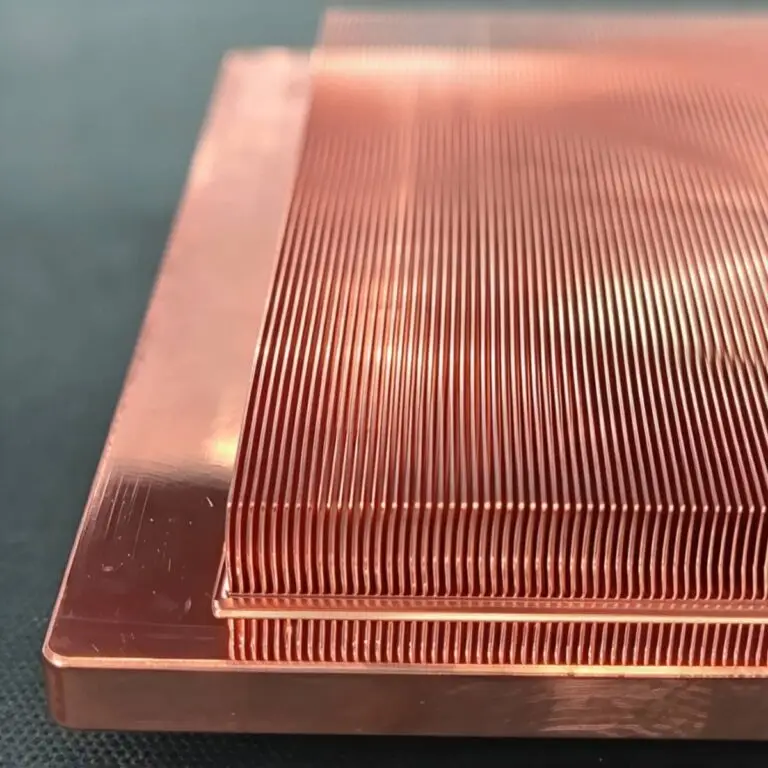
Diamond-Copper Thermally Conductive Composite. High thermal conductivity, tunable CTE, robust.
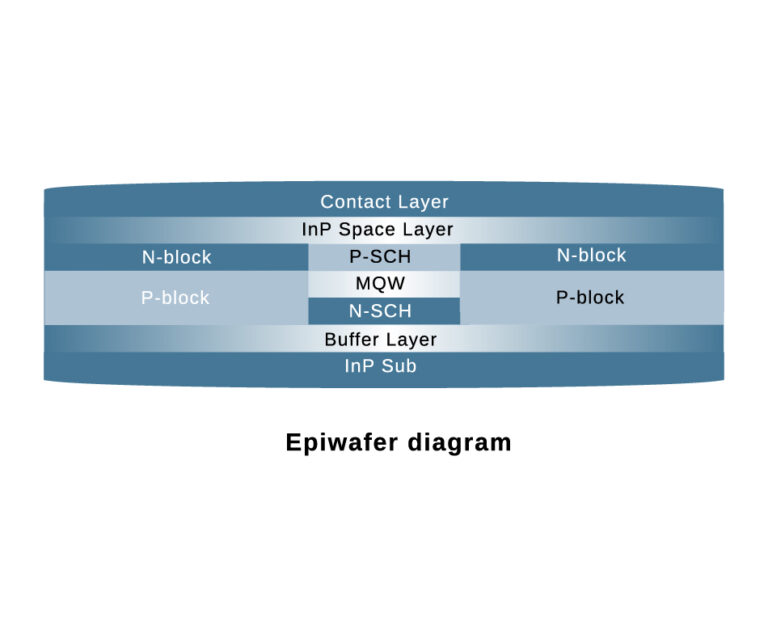
The DE-CW-1310 DFB EPI wafer, a high-performance epitaxial structure designed for distributed feedback (DFB) lasers operating at 1310 nm....
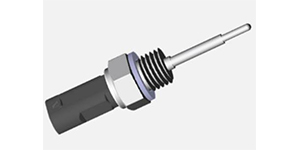
Ceramic thin-filmvacuum sensor Optical gas massflowmeter Liquid mass flowmeter Force sensor MEMS...
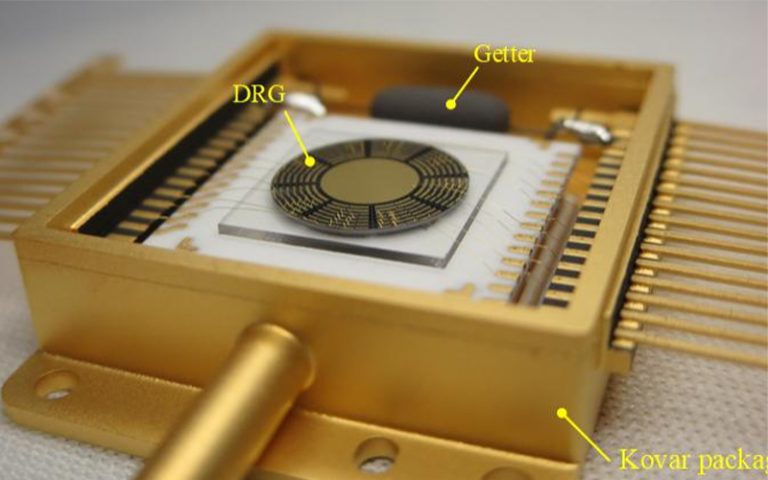
Photoelectric sensing chip Light source chips Optical transmission and modulationchips Optical detection and receptionchips...
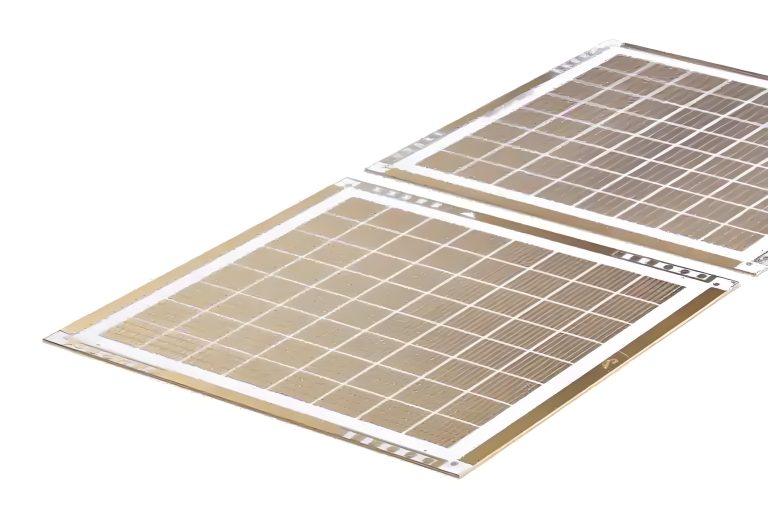
Using a“Detach Core”which has two-layers carrier foil structure on the surface as a core, and forming...
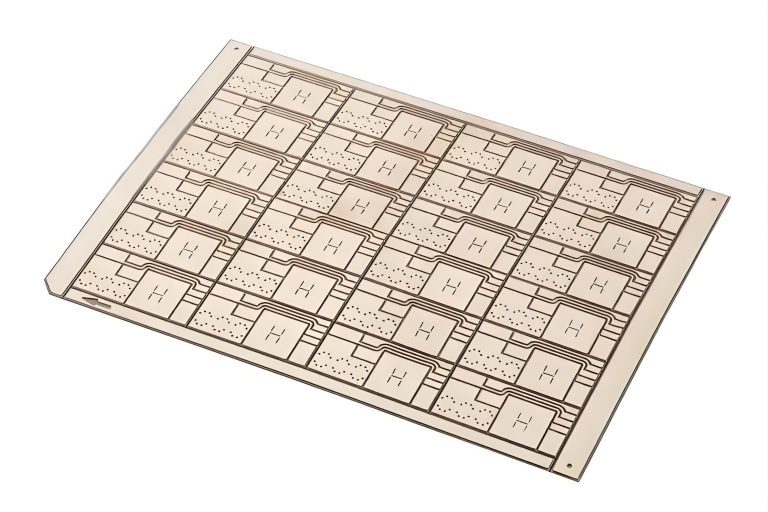
Tenting process is a kind of subtractive process, the process as follows: Laminating photosensitive film...
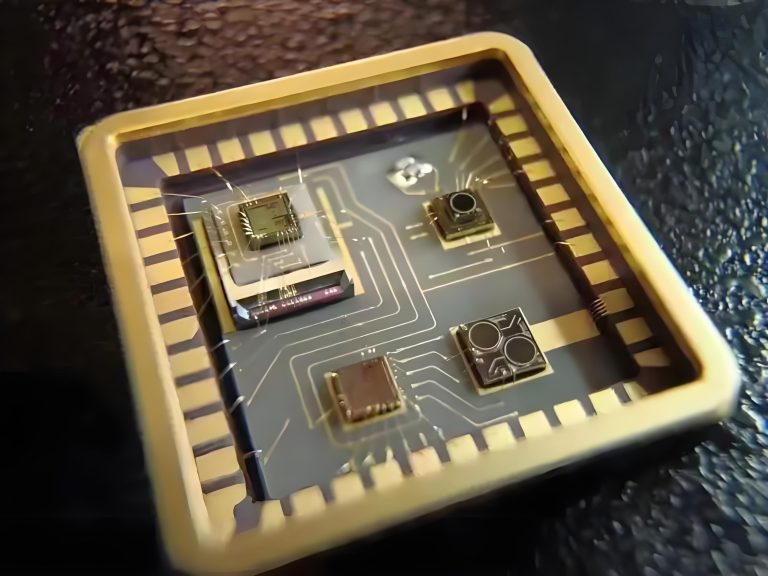
Modified Semi-Added Process abbreviated as mSAP, which can be used on the core or build-up layers, pattern...
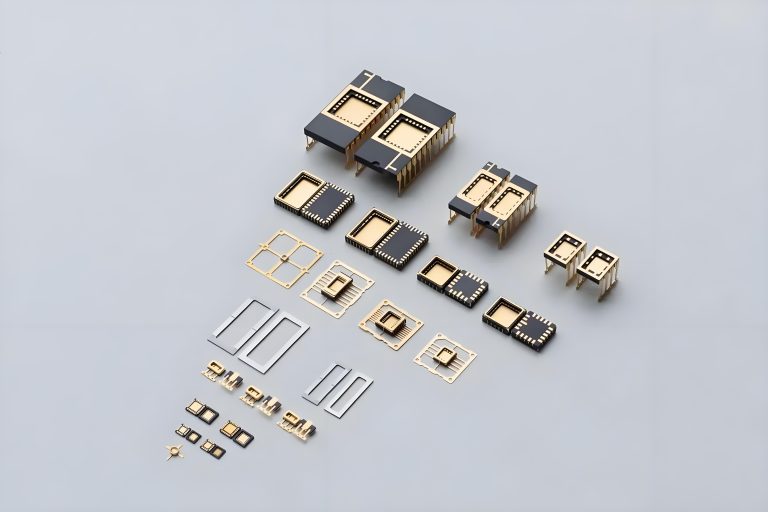
Semi-Added Process abbreviated as SAP, using on the build-up-layer pattern forming as follow:First depositing...
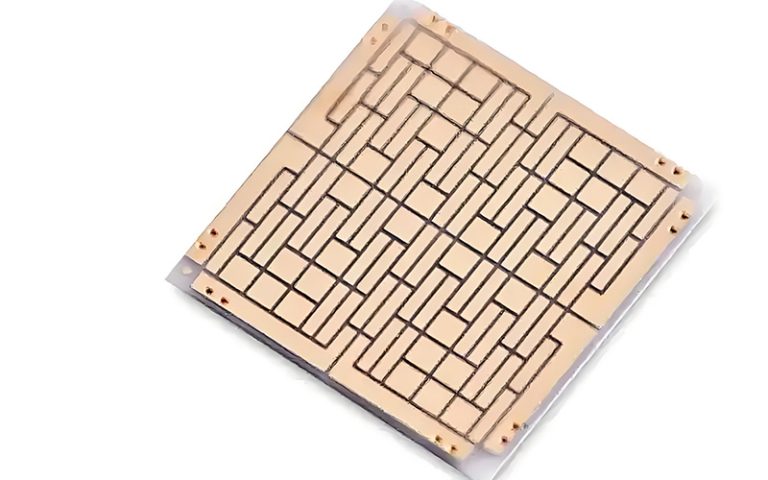
The product generally adopts the pressing lamination process of semi-curing sheets , and line formation...
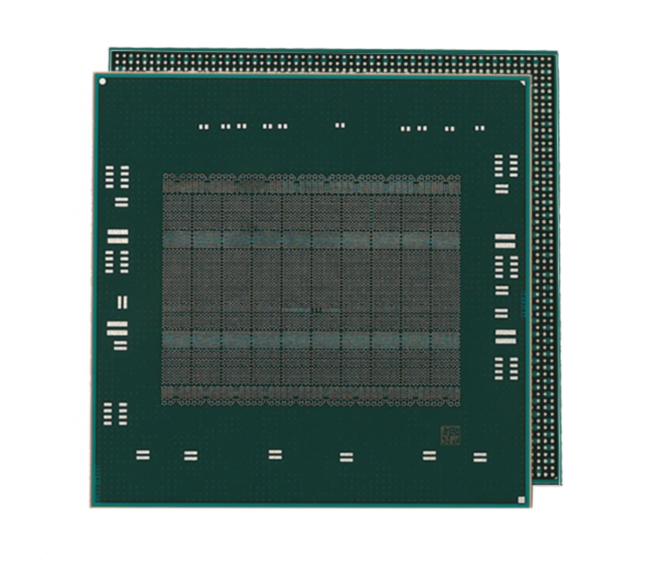
The products generally adopt the Build-up Film Lamination process, and the circuit formation uses the...