
High-altitude drone tasks go beyond simple flight. They focus on keeping a steady data connection. Hardware faces low air density and cold conditions at the same time. If you develop new industrial or fuel-based drones, you know standard parts often fail under low pressure. The field now turns to 6G links. This change alters rules for flight control units (FCU). It calls for shifting from basic circuits to targeted aerospace hardware. Such parts manage large data flows without overheating or signal drops. To lead in this area, examine how your hardware copes with heat strain and fast signal disruptions at 30,000 feet. For sourcing reliable components, review DEEPETCH stock for key items before your next project begins.
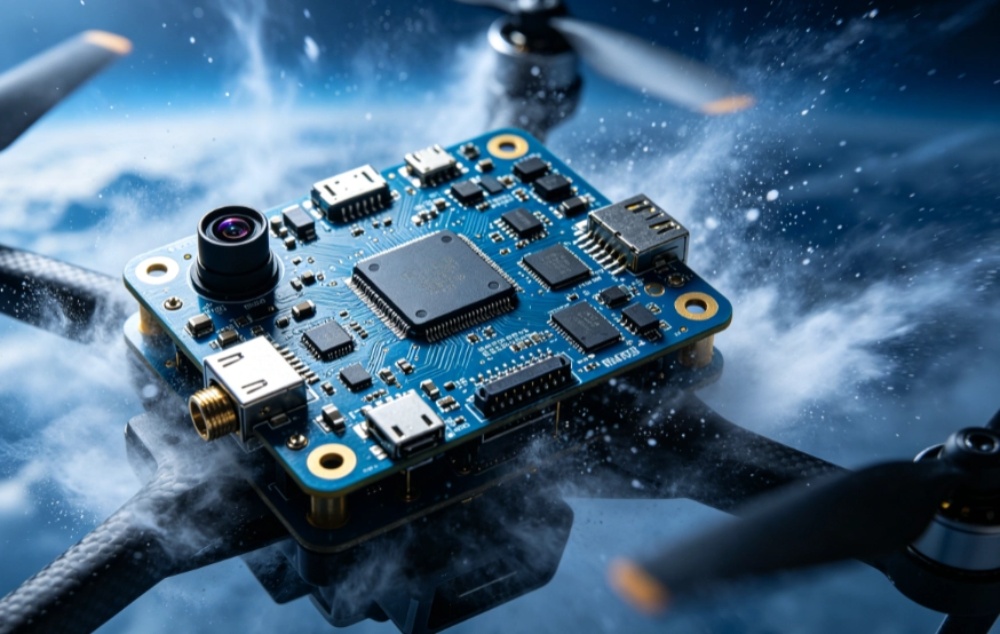
Operating a drone at high levels tests each transistor closely. Cold air brings quick temperature shifts. These can break solder links in moments. Fuel-driven industrial drones create strong shakes and warmth. Low air pressure makes usual cooling fail. With 6G added, the need for instant, quick data transfer grows. Your flight controller handles more details than before. If the board lacks design for these loads, the aerial tool turns into costly falling parts.
Switching to 6G involves sub-terahertz bands. Signal weakening poses ongoing risks there. External units with long cables no longer work well. You must build in TR transceiver chips and modules right into the flight control PCBA. This keeps delays low for group drone control. Parts need strengthening for power jumps in satellite systems. When choosing these, seek transceivers that fit aerospace EMI and ESD standards. They stop the drone’s drive system from blocking its own links.
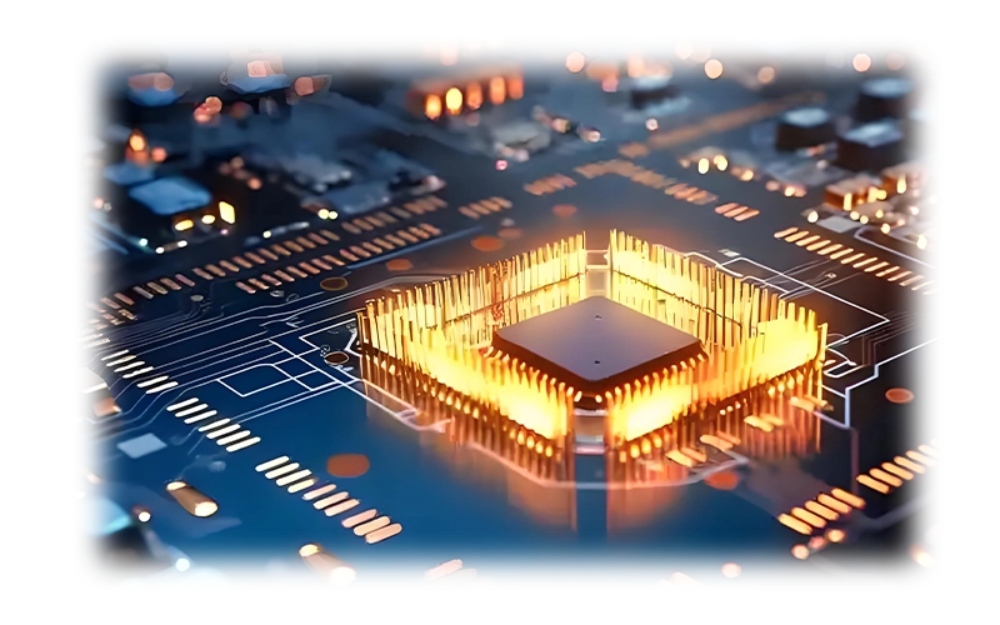
High levels bring cosmic rays and satellite noise to unprotected circuits. Focus on layered board setups with set ground layers to absorb interference. 6G signals react strongly to blocks and layout flaws. A small trace length difference causes timing errors that cut connections. Direct links and fast connectors aid this. Yet the core fix comes from the base material choice.
Many start with software thoughts. But at high skies, basic physics rules all. If the base spreads differently from chips, inner ties will break over time. This demands going past common FR4 types. Since 2019, experts turn to DEEPETCH. The firm leads in fast optical and chip solutions. It has aided over 1,560 clients worldwide through tech-focused advances. Key areas include 400G/800G modules and dependable parts. Bases in places like Shenzhen and Beijing make them a solid choice for field-tested aerospace hardware.
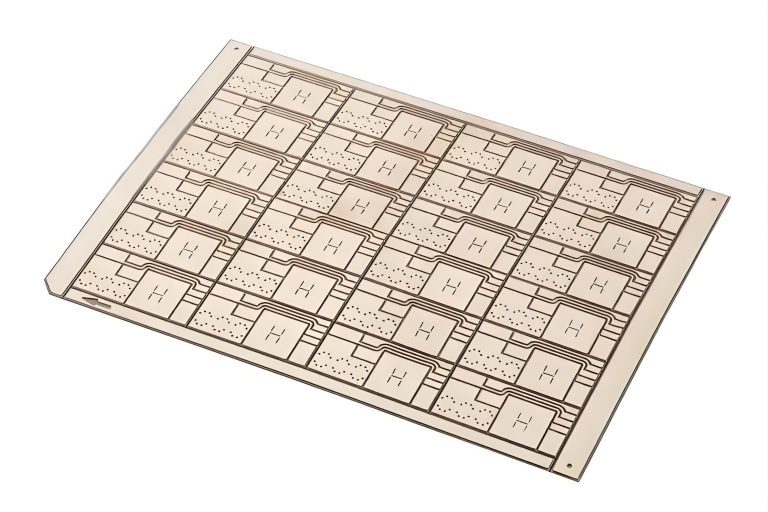
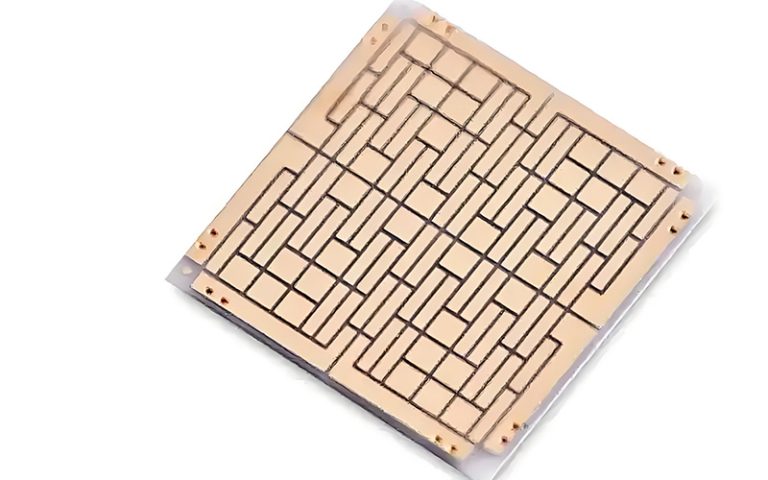
Heat removal in low air or empty space proves difficult. Few air particles exist to move warmth away. For this reason, select Aluminium Nitride (AlN). AlN delivers thermal flow nearly eight times above alumina levels. It serves as a top heat spreader for 6G amplifiers. Basing TR modules on AlN stops the processor from slowing during heavy drone tasks. Though specialized, it stands as an essential step for elevated flights.
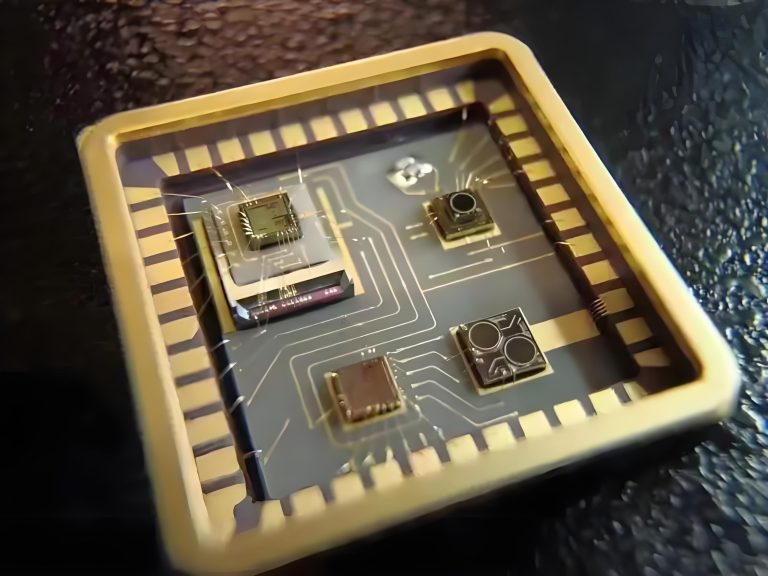
Basic plastic covers allow leaks and gas release in low pressure. This harms inner parts. Opt for Ceramic Ball Array Housing (CBGA) on chips for vital flight info. The ceramic shell seals tightly against water and pressure shifts. It gives strong electrical separation with minimal loss. For hobby drones, it may seem extra. But in work UAVs with costly sensors, CBGA’s firm structure avoids board bends in sharp turns.
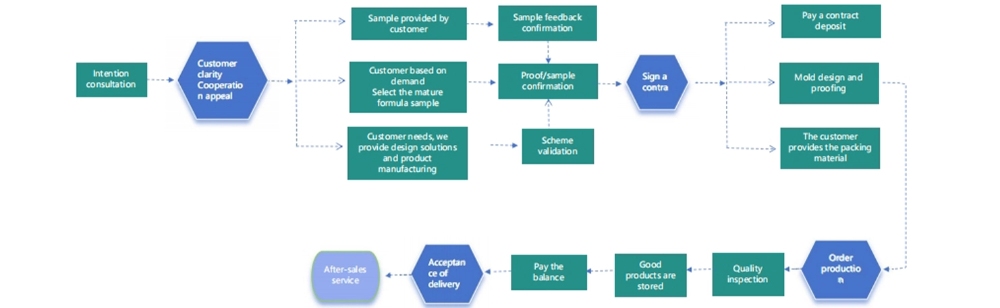
A strong design covers just part of the work. You also require a plant skilled in error-free builds. By 2026, the sector heads to full custom EMS (Electronic Manufacturing Services). These cover initial aerospace circuit plans to final 6G assembly. Avoid broad factories for satellite boards. Choose a team that meets IATF 16949 and ISO 9001 rules. This guarantees flawless solder work.
Personalization matters in 6G transceiver builds. Flexibility allows shifts from small test runs to large output without quality loss. A focused EMS team provides “Turnkey” options. They source rare chips and join complex multi-part units. This holds value for 6G gear where software-led hardware needs close ties between planners and builders.
Drone checks go further than basic power tests. Include heat shock trials, shake platforms, and vacuum rooms to mimic high areas. Early DFM (Design for Manufacturing) spots issues before full runs cost extra. Note that minor flaws in film layers or laser patterns during part creation can cause later breakdowns.
The divide between basic and work gear grows larger. 6G speeds this change. Without space-level materials and 6G-ready TR modules in your flight controller, risks mount high. Elevated flights spare no room for low-cost builds. For 2026 plans, base success on silicon and base quality in your FCU. If set to improve tools, contacting the experts at DEEPETCH provides the needed advantage in the B2B drone field.
Q1: Why is Aluminium Nitride better than Silicon for 6G UAV components?
A: Aluminium Nitride offers much higher thermal conductivity and electrical insulation, which is vital for the high-power, high-frequency needs of 6G TR modules where heat cannot be easily dissipated in thin air.
Q2: Can I use standard PCBA for satellite communication in drones?
A: It is risky. Standard boards often lack the radiation resistance and thermal stability required. Aerospace-grade circuits using CBGA housing and specialized substrates are much safer for high-altitude satellite links.
Q3: What is a TR module and why does my drone need one?
A: A TR (Transmit-Receive) module is a component that handles both sending and receiving signals. For drones, high-quality TR modules ensure stable, low-latency communication for 6G and radar systems.
Q4: How does 6G change the design of flight control units?
A: 6G requires much tighter integration of radio frequency components and better thermal management because the higher frequencies generate more heat and are more susceptible to signal loss.
Q5: What should I look for in an EMS partner for aerospace electronics?
A: Look for certifications like IATF 16949 and ISO 9001, and ensure they have experience with high-frequency 6G hardware and specialized packaging like CBGA.
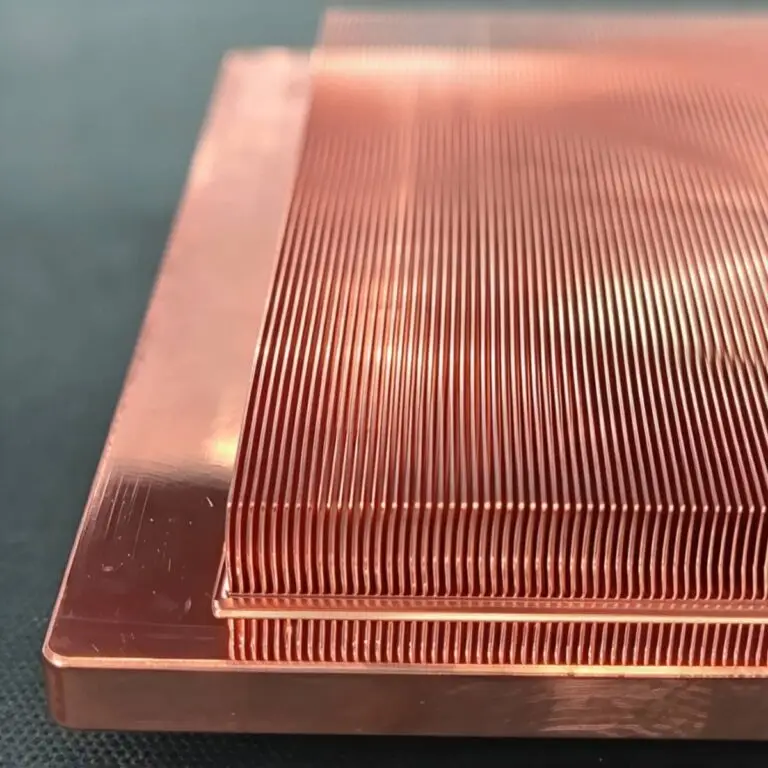
Diamond-Copper Thermally Conductive Composite. High thermal conductivity, tunable CTE, robust.
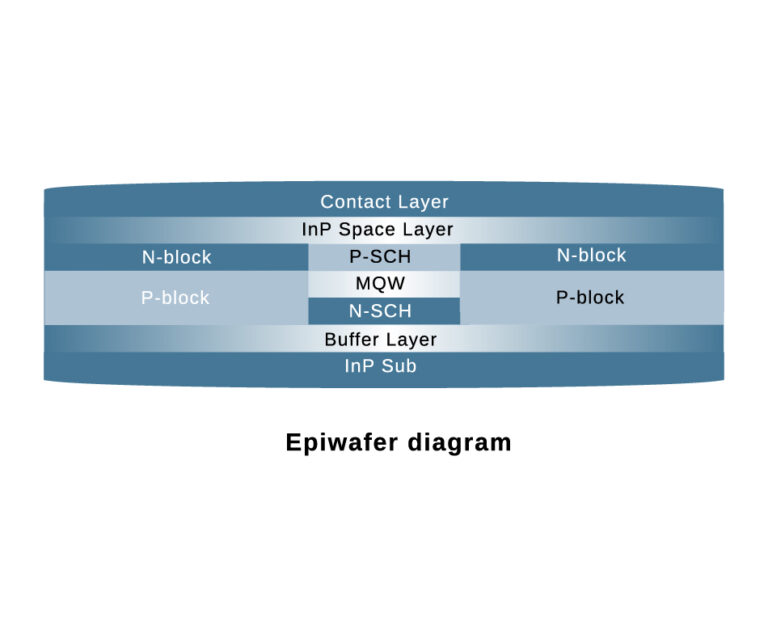
The DE-CW-1310 DFB EPI wafer, a high-performance epitaxial structure designed for distributed feedback (DFB) lasers operating at 1310 nm....
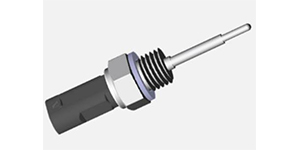
Ceramic thin-filmvacuum sensor Optical gas massflowmeter Liquid mass flowmeter Force sensor MEMS...
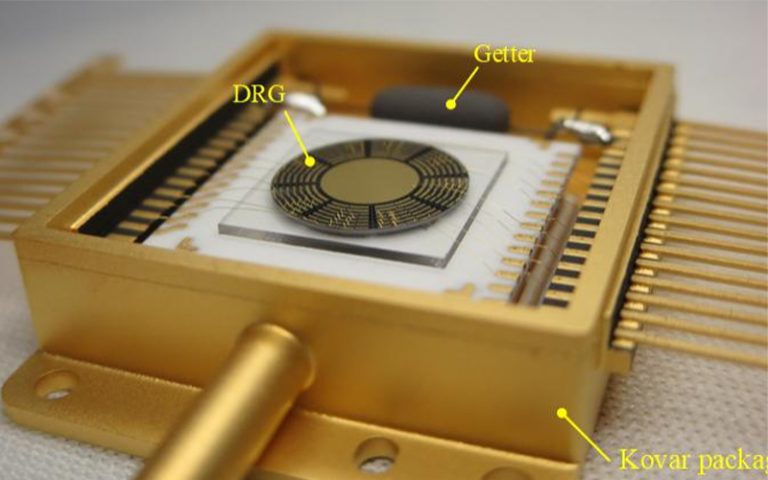
Photoelectric sensing chip Light source chips Optical transmission and modulationchips Optical detection and receptionchips...
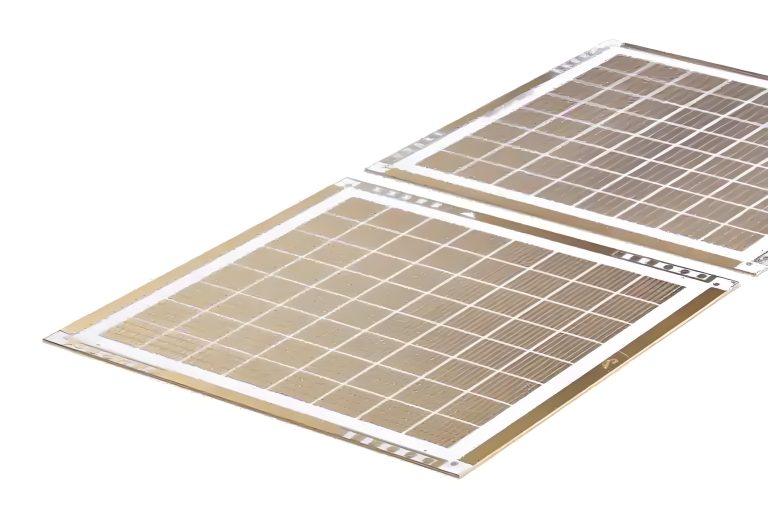
Using a“Detach Core”which has two-layers carrier foil structure on the surface as a core, and forming...
Tenting process is a kind of subtractive process, the process as follows: Laminating photosensitive film...
Modified Semi-Added Process abbreviated as mSAP, which can be used on the core or build-up layers, pattern...
Semi-Added Process abbreviated as SAP, using on the build-up-layer pattern forming as follow:First depositing...
The product generally adopts the pressing lamination process of semi-curing sheets , and line formation...
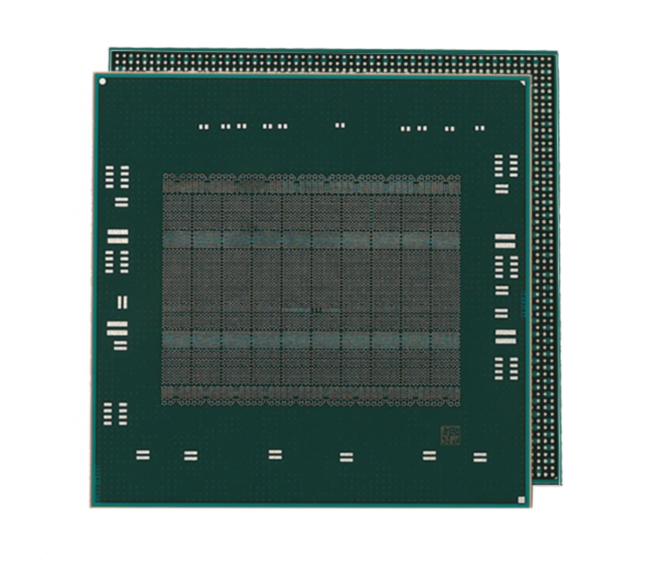
The products generally adopt the Build-up Film Lamination process, and the circuit formation uses the...