
Brain-inspired computing moves past mere ideas in research documents. It appears in many places today. Examples include edge AI in drones and large data centers that copy the brain’s energy-saving neural work. Yet the issue remains: software reaches limits when hardware lingers in the 5G period. To gain ground in building quicker, more power-saving tools, linking 6G links with tailored hardware builds offers the clear route ahead. If you work as a builder or buyer lead in demanding fields like aerospace or telecom, you likely see that ready-made parts fail for these advanced tasks.
If you seek a collaborator who understands the tough work of chip production, DEEPETCH stands out as a key choice. Since 2019, they have built a strong position as a leading specialist in the IDM model. This approach lets them manage design through production internally. You can turn to them for 400G/800G transceivers or specific EMS services for satellite setups. They provide the solid skills to support it all. Unlike simple brokers, they operate as a complete semiconductor team. They grasp why a basic PCB might overheat under 6G heat pressures. In an era of supply chain issues, a partner who oversees the full chain proves invaluable.

The goal of brain-like processing stays straightforward. It involves chips that handle data like a brain does. They use very little power yet manage billions of tasks. But scaling these setups hits barriers quickly. Today’s hardware structure relies on the old method of shifting data between memory and processor. This setup causes a major slowdown. The problem goes beyond software delays. It stems from physical bounds of materials and circuit arrangements. Adding 6G speeds makes these issues worse. They grow rather than remain steady.
Consider the huge amount of data that 6G will carry. Rates reach terabits per second. Standard links on hardware create backups before data hits the chip’s “brain” section. Such delays ruin the aim of brain-inspired computing. Tailored hardware must blend data flow into the processing step. Otherwise, the system wastes power just waiting for data. This approach keeps operations smooth. It avoids needless energy loss.
Power challenges every builder in mobile or aerospace electronics. Brain-inspired chips aim for efficiency. However, if surrounding communication parts use too much electricity, gains vanish. Typical 5G elements draw high power. In 6G setups, with frequencies in the TeraHertz band, signal losses produce intense heat. Without tailored hardware for low-loss power control, devices slow down to avoid excess warmth. This limits performance. Systems stay reliable but under capacity.
Discussions on 6G shift to the basic building blocks. Silicon works well but faces caps, particularly at 100 GHz and beyond. Material science takes center stage here. You must examine how certain mixes and bases manage the rapid 6G signals. Selecting the incorrect material early leads to high costs down the line. Proper choices save resources. They ensure long-term success.
Standard Silicon lacks the speed to match 6G needs. That explains the rise of Silicon And Germanium (SiGe). Mixing in Germanium creates a blend of compound semiconductor speed and silicon’s affordable methods. It serves as an ideal balance for high-frequency boosters and transceivers in 6G tools. Noise stays minimal, and signals remain sharp. This suits brain-inspired systems that require precision. Performance holds steady across uses.
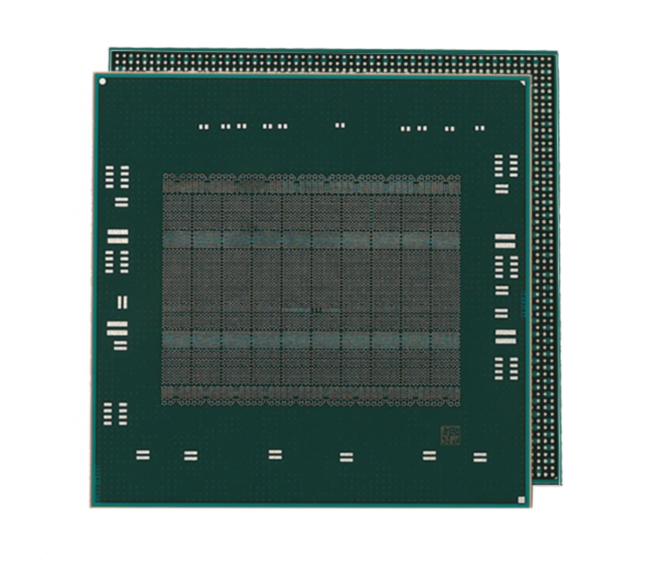
Dense chips demand a stable foundation under stress. Here, ABF substrate (epoxy resin deposited film) fits the role. It forms a slim, capable layer for precise circuit lines. ABF enables the tight connections needed for current CPUs or neural units in compact sizes. It offers heat resistance and electrical separation. This prevents 6G signals from mixing and corrupting data. Reliability improves in tight designs.
In aerospace or satellite work, reliability means far more than basic standards. Space or fast radar links face harsh conditions. Extreme heat, radiation, and EMI demands would damage typical phone parts instantly. Custom TR (Transmit-Receive) units form the core support. They act as the system’s main sensors. Without them, operations falter. Strength defines success.
Transceiver chips drive radar or satellite functions. They must endure tough settings. Components meet tight EMI and ESD rules while using low power, often at 3.3V. In brain-inspired 6G designs, these chips process and send data without errors. Signal quality stays top-notch, even during high-speed motion like thousands of miles per hour. Custom builds handle this strain. They deliver consistent results.
Starting from zero can delay progress. Integrated TR units combine laser, sensor, and logic in one unit. With VCSEL and PIN parts, they support 10G, 256G, or 50G rates over different spans. For 6G ahead, ready modules let teams focus on brain-like algorithms. They avoid concerns over SFP or QSFP durability. Integration speeds development. Projects advance efficiently.
The finest neural network loses value if software cannot link with hardware. This marks the time of “software-defined hardware.” In 6G, software control of TR units and chip power modes matters as much as connections. Designs require software and hardware teams to align from the start. This unity boosts outcomes. It avoids common pitfalls.
6G networks shift quickly. Frequencies change, or data volumes surge. Brain-inspired setups must adjust instantly. Hardware requires built-in flexibility. Tailored PCBA for 6G lets software adjust hardware output in real time. It might cut neural cores for power savings or boost cooling for intense tasks. Such teamwork creates true intelligence. Devices respond effectively to demands.
This stage tests real execution. Designing reliable boards for 6G links or aerospace electronics demands specialized factories. Custom EMS handles DFM for intricate layouts. It covers 6G TR parts or drone flight controls. The build process must stay perfect. A single weak joint in satellite wiring ends the effort. Quality ensures mission success.
Locating a maker who grows with your needs poses difficulties. Some handle samples but struggle with large runs like 10,000 units. Reviewing a partner’s company overview proves essential. Seek a firm with solid history and setup for bulk output without quality drops. This supports steady progress. It fits demanding projects.
The IDM model avoids finger-pointing. Issues stay internal under one team. From wafer start to final TR package, control remains complete. This raises output rates and product uniformity for 6G or brain-inspired work. Fabless groups lack this oversight. It provides pro-level assurance.
Semiconductor delays frustrate teams. Quick access to parts keeps work on track. Chips in stock cut wait times by weeks. For SiGe parts or test transceivers in early 6G software, a stocked partner offers edges. It speeds research and keeps lines active. Efficiency drives competition.
If you aim to build without uncertainty in 6G and neural hardware, review your BOM with experts. Avoid production blocks. Reach out and contact us to learn how tailored hardware frees your software potential.
Q1: Why is SiGe preferred over standard Silicon for 6G devices?
A: Standard Silicon struggles with the extreme frequencies of 6G. SiGe offers much higher carrier mobility and lower noise, making it the better choice for high-speed transceivers and amplifiers without the massive cost of pure compound semiconductors.
Q2: What role does ABF substrate play in brain-inspired chips?
A: ABF substrate allows for the incredibly dense and fine circuitry required for neural processing units. It provides the necessary insulation and thermal stability to keep high-speed signals from interfering with each other in a small form factor.
Q3: Can these custom TR modules handle the radiation in space applications?
A: Yes, custom-designed TR modules for aerospace are built to meet strict EMI and ESD requirements. They are specifically tested to withstand the harsh conditions of space where standard consumer electronics would fail.
Q4: Do you offer both OEM and ODM services for 6G hardware?
A: Yes, through a full IDM and EMS model, you can get everything from basic manufacturing of your design (OEM) to a completely custom-engineered solution (ODM/JDM) tailored to your specific 6G or drone circuit needs.
Q5: How does the 3.3V power supply requirement benefit mobile 6G devices?
A: A 3.3V supply is a standard for many low-power industrial and aerospace components. Keeping the voltage low helps reduce heat generation and extends battery life, which is critical for brain-inspired devices running complex AI algorithms at the edge.
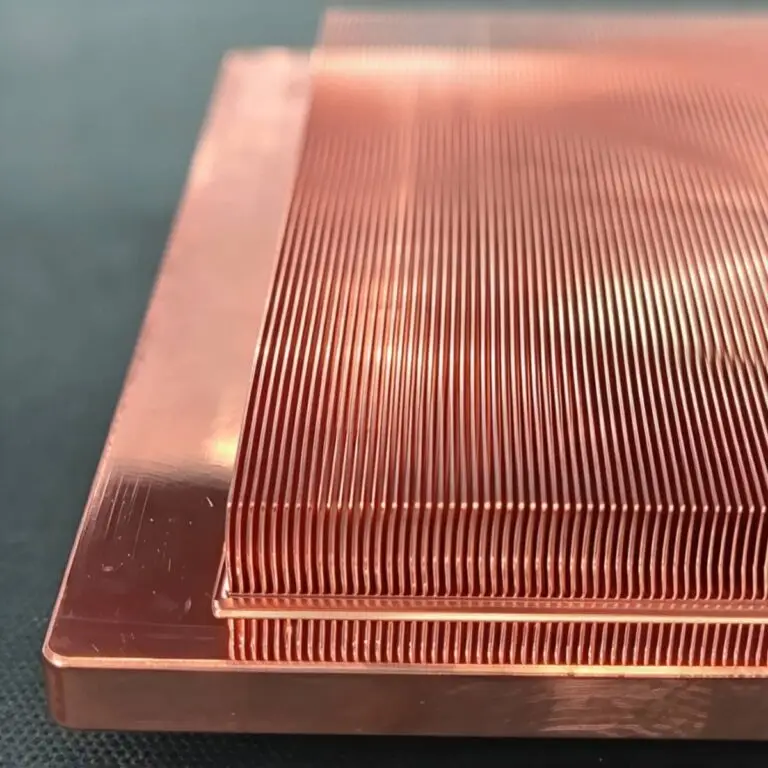
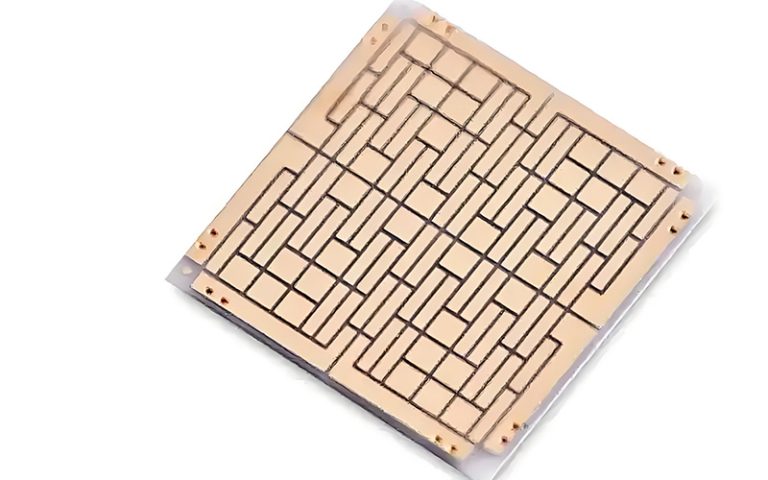
Diamond-Copper Thermally Conductive Composite. High thermal conductivity, tunable CTE, robust.
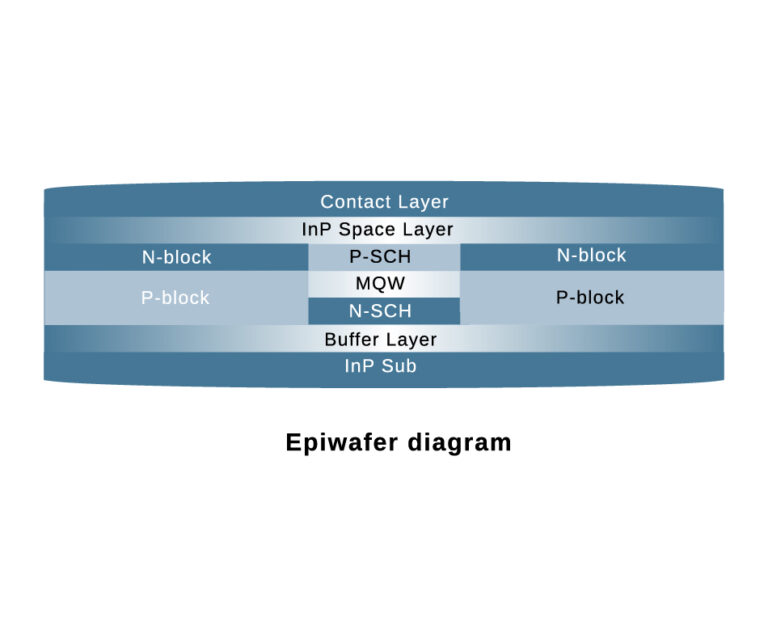
The DE-CW-1310 DFB EPI wafer, a high-performance epitaxial structure designed for distributed feedback (DFB) lasers operating at 1310 nm....
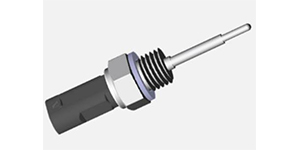
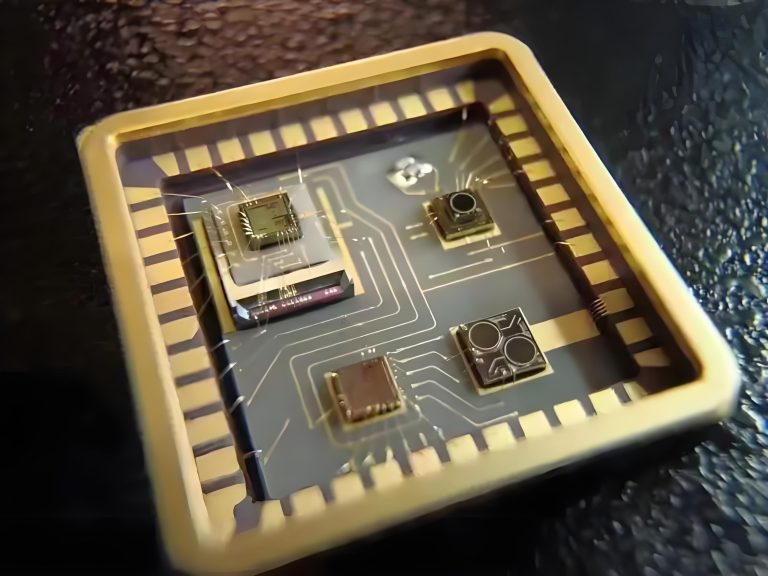
Ceramic thin-filmvacuum sensor Optical gas massflowmeter Liquid mass flowmeter Force sensor MEMS...
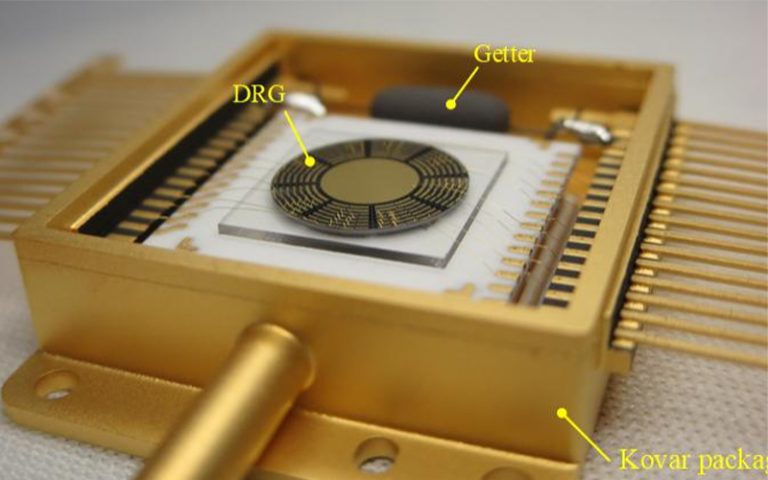
Photoelectric sensing chip Light source chips Optical transmission and modulationchips Optical detection and receptionchips...
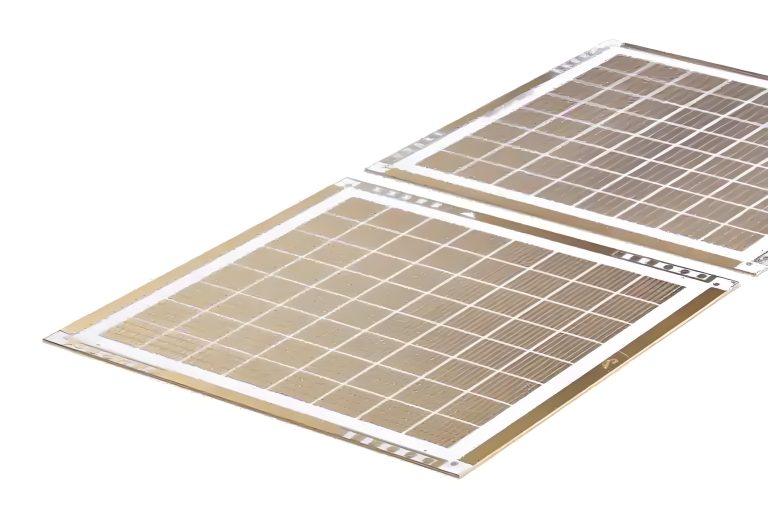
Using a“Detach Core”which has two-layers carrier foil structure on the surface as a core, and forming...
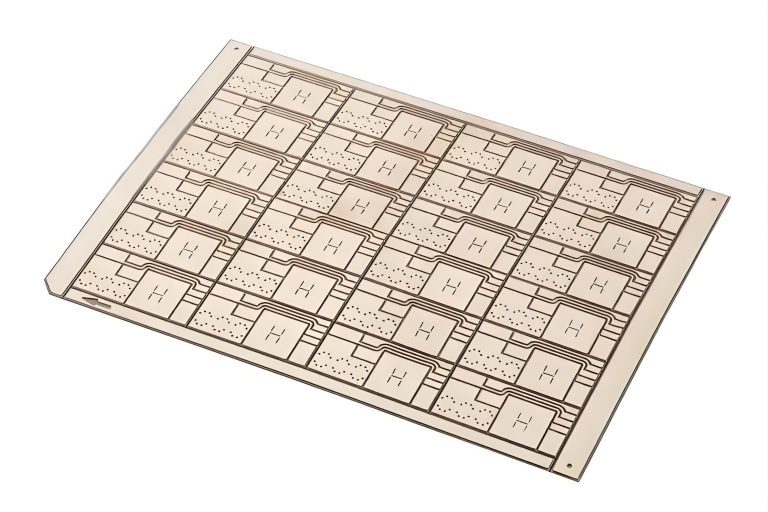
Tenting process is a kind of subtractive process, the process as follows: Laminating photosensitive film...
Modified Semi-Added Process abbreviated as mSAP, which can be used on the core or build-up layers, pattern...
Semi-Added Process abbreviated as SAP, using on the build-up-layer pattern forming as follow:First depositing...
The product generally adopts the pressing lamination process of semi-curing sheets , and line formation...
The products generally adopt the Build-up Film Lamination process, and the circuit formation uses the...