
While striving to control energy consumption and costs, enterprises continue to face the challenge of surging data volumes. To address these pressing demands, optical module technology is rapidly upgrading from 400G to 800G, approaching transmission speeds of 1.6T. In recent years, shipments of 400G and 800G modules have easily surpassed the 20 million mark. With the growing bandwidth demands from artificial intelligence and cloud computing, the entire market is projected to reach approximately $12 billion by the end of 2026.

Companies like DEEPETCH, founded in 2019 and headquartered in Shenzhen, offer inventive and trustworthy semiconductor solutions that align closely with this swiftly evolving field. They concentrate on delivering high-performance components for contemporary data centers and expanding sectors, providing you with sturdy options to enhance your network infrastructure. Discover their full lineup at DEEPETCH to identify products that suit your particular requirements perfectly.
Several strong forces clearly accelerate the transition to faster and more closely combined optics. You need adaptable solutions that scale effortlessly as demands rise steadily.
Extensive AI training runs and live inference tasks require enormous interconnect capacity. Today’s GPU clusters frequently demand terabits of throughput per rack, so 800G has become essential right now while 1.6T represents the obvious next milestone. This sharp increase directly spurs greater adoption of sophisticated transceivers.

Leading cloud operators keep investing heavily in AI-capable buildings, and this ongoing commitment reliably lifts optical module volumes higher every year. Bandwidth requirements often double at regular intervals, therefore timely upgrades prove crucial to maintain minimal latency and maximum throughput within vast data facilities.
Numerous innovative applications beyond standard computing, such as exact sensing and immediate processing, profit immensely from optics that minimize delays dramatically. Quicker modules enable various systems to collaborate seamlessly and dependably in real settings.
High-speed optical modules currently serve vital roles in multiple core industries where information flows without pause. You can readily implement these enhancements across different domains to improve overall efficiency and output.
Current networks depend greatly on robust optics for main backbone routes and internal data center connections. Smart heat handling and compact port arrangements fully support advanced 5G deployments and upcoming networks in the communications industry. Additionally, these modules deliver steady performance over long distances even during peak traffic periods.

AI setups demand exceptionally high bandwidth to ensure fluid communication between servers. Superior materials together with thoughtful packaging maintain stability throughout demanding calculation phases in the AI industry. Since models keep growing in size and complexity, the urgency for quicker optics intensifies further to prevent any slowdowns.
Trustworthy components become indispensable in harsh settings where reliability cannot be compromised. Tough ceramics along with accurate sensors supply consistent outcomes for cars, medical tools, and unmanned flying vehicles. These approaches naturally cover automotive, healthcare, and drone applications, supplying the precision and resilience that every area requires.

Steady improvements in materials plus smart design decisions render significantly higher speeds both feasible and budget-friendly. You gain tangible advantages from choices that thoughtfully balance pure speed, energy consumption, and lasting stability.
Present-day 800G offerings depend on PAM4 modulation combined with well-known form factors including OSFP and QSFP-DD. They supply outstanding short-reach multimode alternatives alongside extended single-mode variants that operate consistently in actual deployments. Besides, integrated monitoring tools simplify setup and ongoing oversight considerably.
The journey toward 1.6T modules gathers real momentum, and initial versions commonly show up as paired 800G arrangements. Co-packaged optics position light sources far nearer to processing chips, thereby reducing power needs sharply while paving the way for denser configurations soon.
Recent layouts incorporate advanced cooling elements as standard features. Liquid cooling support now emerges frequently to cope with increasing heat output without pushing electricity bills excessively high. Therefore, facility managers achieve sustainable expansion even as equipment density rises steadily.
You merit collaborators who remain in front of quick market changes. DEEPETCH regularly supplies deep knowledge across the complete semiconductor supply chain.
Their broad range backs important protocols yet keeps energy use modest and dependability strong. Built-in digital checks plus complete standard adherence promise smooth fitting into mission-critical systems. Furthermore, varied distance capabilities allow you to pick precisely the right fit for any given project.
Persistent development work aims squarely at forthcoming speed levels. Thorough blending of cutting-edge chips readies your setup for the unavoidable bandwidth leap coming soon. This proactive mindset assists you in sidestepping expensive overhauls down the road.
Versatile production options adjust items to match exact specifications without hassle. That kind of adaptability meets strict demands in vehicle electronics, patient observation equipment, and guidance systems for drones quite well. In turn, you obtain tailored answers that address your unique operating hurdles directly.
Place yourself favorably by picking optics that completely satisfy growing expectations. Transitioning to 800G today and planning thoroughly for 1.6T guarantees your connections provide solid results far into the AI-focused tomorrow. Remaining ahead of the curve holds expenses reasonable and preserves competitive strength over time.
Q1: What primarily drives the shift to 800G and 1.6T optical modules?
A: Explosive AI and cloud computing needs create urgent bandwidth requirements, with hyperscale data centers leading the expansion.
Q2: When will 1.6T modules see widespread adoption?
A: Commercial ramp starts in 2025, with significant shipments expected in 2026 as AI clusters scale.
Q3: How do co-packaged optics differ from traditional pluggables?
A: They integrate optics directly with chips for lower power and higher density, though pluggables remain dominant short-term.
Q4: Which industries benefit most from these advancements?
A: Communications and AI lead, but automotive, healthcare, and drones gain from reliable high-speed components.
Q5: Why focus on power efficiency in new modules?
A: Rising densities increase energy demands, so efficient designs with cooling support reduce operational costs long-term.
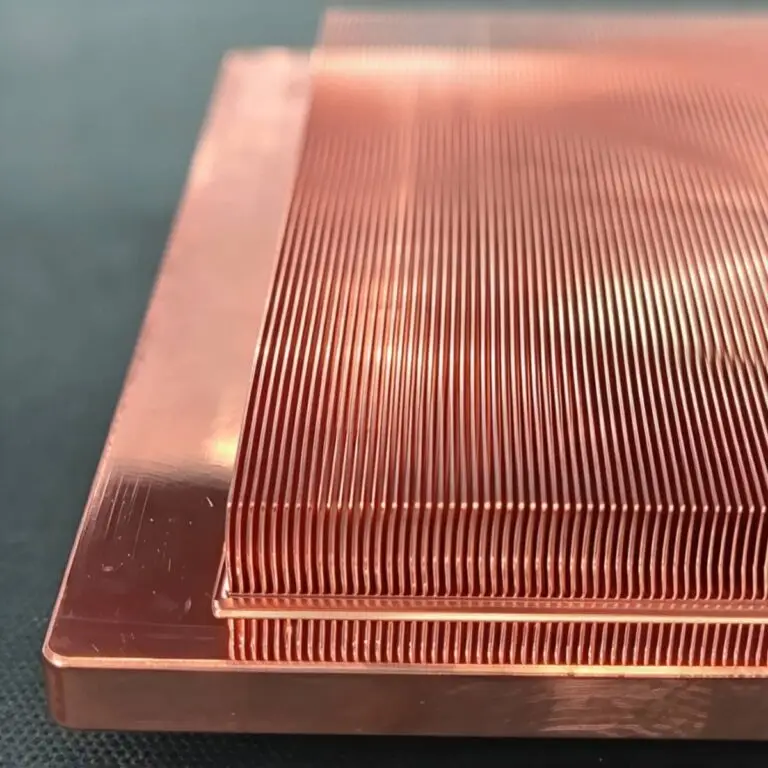
Diamond-Copper Thermally Conductive Composite. High thermal conductivity, tunable CTE, robust.
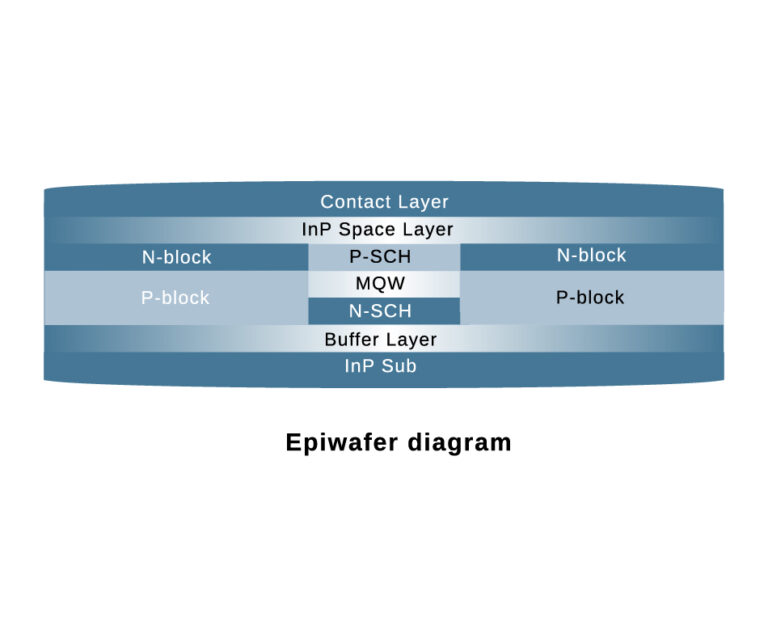
The DE-CW-1310 DFB EPI wafer, a high-performance epitaxial structure designed for distributed feedback (DFB) lasers operating at 1310 nm....
Ceramic thin-filmvacuum sensor Optical gas massflowmeter Liquid mass flowmeter Force sensor MEMS...
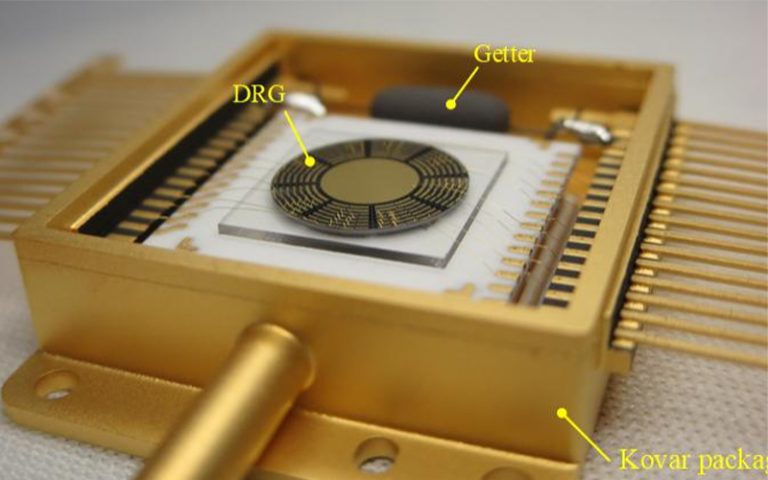
Photoelectric sensing chip Light source chips Optical transmission and modulationchips Optical detection and receptionchips...
Using a“Detach Core”which has two-layers carrier foil structure on the surface as a core, and forming...
Tenting process is a kind of subtractive process, the process as follows: Laminating photosensitive film...
Modified Semi-Added Process abbreviated as mSAP, which can be used on the core or build-up layers, pattern...
Semi-Added Process abbreviated as SAP, using on the build-up-layer pattern forming as follow:First depositing...
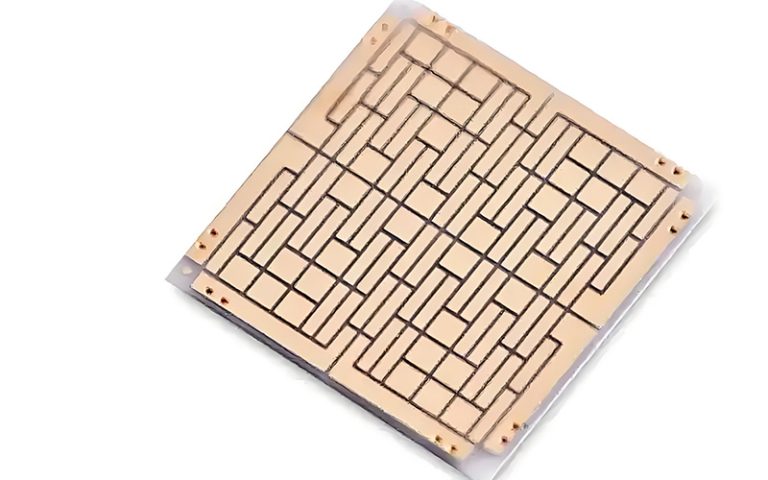
The product generally adopts the pressing lamination process of semi-curing sheets , and line formation...
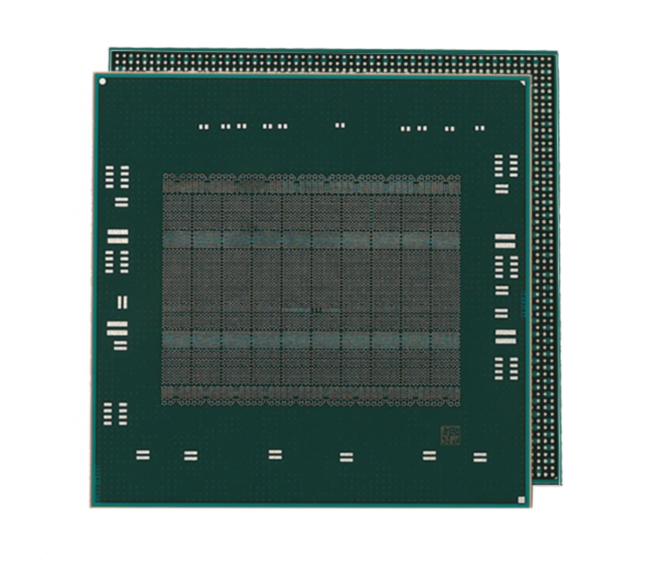
The products generally adopt the Build-up Film Lamination process, and the circuit formation uses the...