
800G optical modules look small from the outside, but they carry serious engineering pressure inside a compact package. In AI computing, cloud data centers, supercomputing rooms, and high density switch clusters, you do not judge a link only by peak bandwidth. You also care about lane stability, heat, power draw, fiber reach, board layout, and whether the module can keep running after thousands of ports work day and night.
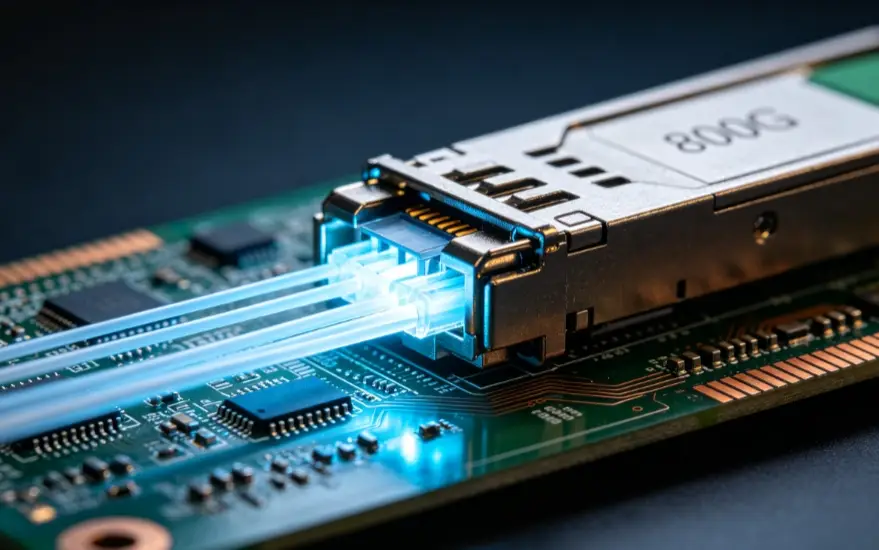
This is where optical communication meets advanced PCBA design. Light handles high bandwidth transmission across fiber, while the PCBA handles electrical lanes, power delivery, signal control, diagnostics, and heat paths. A good 800G optical module is not just an optical part. It is a full system built around materials, chips, packaging, firmware, board design, and testing.
DEEPETCH works around high speed optical modules, semiconductor materials, chip resources, and integrated manufacturing support. Its product information covers 10G to 800G transceiver series, 400G and 800G liquid cooling transceivers, Active Optical Cable, Direct Attach Cable, and high speed cables such as AEC, ACC, and DAC. The company also supports OEM, ODM, and JDM services for data centers, AI computing centers, cloud computing, and supercomputing applications.
An 800G optical module sits between optical fiber and the host board. On one side, it sends and receives light. On the other side, it connects with switch chips, network cards, or accelerator platforms through high speed electrical lanes. Both sides must stay stable at the same time. A good fiber link can still show errors if the board channel is weak.
Many 800G optical modules use 106.25Gb/s PAM4 per lane. PAM4 carries more information than older binary signaling, but it also leaves less noise margin. Small board problems become easier to see. Poor impedance control, long vias, uneven routing, or noisy power can hurt the signal.
DEEPETCH 800G OSFP product data includes 8x106Gbps PAM4 transmitter and receiver architecture, hot pluggable OSFP form factor, digital diagnostic functions, and low power consumption. These details matter because your module must match the electrical behavior of the switch board and the thermal behavior of the rack.
Short reach and longer reach modules do not use the same optical plan. DEEPETCH 800G OSFP product information includes 2xSR4, 2xDR4, and 2xFR4 options. The examples include 850nm VCSEL + PIN for short reach, 1310nm EML + PIN for 500m, and multi wavelength EML + PIN for 2km. Connector choices also change, such as 2xMPO-12/APC and Dual Duplex LC.
For you, this means the module, fiber plant, connector plan, rack design, and PCBA channel budget should be reviewed together. A 60m or 100m link has different needs from a 500m or 2km link.
Material choice becomes more important as optical links move toward higher speed and longer reach. Silicon remains common in electronics because processing is mature and cost is friendly, but high speed optical communication often needs compound semiconductor materials with stronger photoelectric behavior. This is where Indium phosphide (InP) becomes useful.

Indium phosphide is a III-V semiconductor material used in optical communication, laser diodes, photodetectors, and integrated optical circuits. It has a direct bandgap and can support high speed photoelectric conversion. That makes it valuable for devices that need to emit, detect, or process light at high speed.
For 800G systems, InP is not just a material name. It connects to real purchasing questions. Can the optical engine handle high bandwidth? Can it keep stable output over temperature? Can the supplier discuss materials and device behavior, not only assembled parts? These questions matter when you want fewer link errors and fewer field returns.
InP can serve as a base for epitaxial optoelectronic devices. Related process steps may include substrate polishing, doping, lithography, etching, passivation, and packaging. These steps sound technical, but they affect dark current, optical power, reliability, and batch consistency.
When an 800G module uses high speed optical components, the PCBA must work with those components. Driver circuits, receiver circuits, clocking, grounding, and power filtering need careful planning. Material quality gives the optical side a good start. PCBA design decides whether that advantage survives inside a hot, crowded system.
At 800G, PCBA design is not a background task. It is one of the main reasons a module passes or fails in real use. The signal must pass through pads, vias, copper traces, connectors, power rails, and management circuits. There is not much room for luck here.
For 106.25Gb/s PAM4 lanes, your PCB design needs controlled impedance, low loss materials, short differential paths, balanced pair lengths, and clean reference planes. Via design should also be planned because stubs and discontinuities can cause reflection.
Good PCBA design usually checks:
These checks are not fancy, but they keep a link stable when traffic is heavy.
DEEPETCH 800G OSFP examples list 3.3V supply voltage and power consumption levels such as ≤14W for 2xSR4 and ≤16W for 2xDR4 or 2xFR4. Case temperature is listed from 0°C to 70°C. These numbers give you a starting point for thermal planning.
A few watts may sound small, but hundreds or thousands of ports change the story. Heat can affect optical power, receiver sensitivity, clock stability, and component aging. The PCBA should help move heat away from sensitive parts, while the cage, heat sink, faceplate, and airflow do their job. In dense AI racks, a small thermal mistake can become a repeated service ticket.
A correct 800G choice starts with your link map, not with a catalog page. You need to know distance, fiber type, port density, switch form factor, cable path, airflow, and future upgrade plans. The same 800G speed can require very different parts in two different facilities.
Not every 800G connection needs a standard optical transceiver pair. For short links, DEEPETCH product information includes OSFP AEC, ACC, and DAC options. The listed cable series uses 106.25Gb/s PAM4 per lane and includes an I2C EEPROM management interface. Typical reach ranges include 0.5 to 2m for passive copper cable, 0.5 to 5m for ACC, and 0.5 to 7m for AEC.
A simple selection path looks like this:
1. DAC fits very short links where low cost and low power matter.
2. ACC helps when copper needs active conditioning.
3. AEC fits short high speed electrical extension needs.
4. AOC suits lighter cable needs and better electromagnetic behavior.
The cheapest line on a quote may not stay cheap after installation. Thick copper cable can block airflow and make service awkward.
For longer links, wavelength, connector, and reach matter more. DEEPETCH 800G data includes 850nm short reach options, 1310nm 500m options, and multi wavelength 2km options. The connector may be MPO or LC, depending on the module type.
Before buying, you should check your fiber plant. Does the site use multimode fiber or single mode fiber? Are the panels built around MPO or LC? Is the link inside one rack, between rows, or between rooms? These questions decide whether your 800G upgrade feels smooth or becomes a patching headache.
A module supplier can ship parts, but 800G projects often need more than shipment. If a link fails, the cause may come from optical chips, PCBA routing, firmware, host compatibility, connector cleanliness, thermal stress, or poor incoming material control. A stronger support chain helps you find the real cause faster.
DEEPETCH IDM service covers demand confirmation, quotation, design and development, sample production, mass production, packaging logistics, after sales support, and continuous improvement. Its process also includes circuit design, structural design, prototype samples, mass production quality control, and feedback handling.
This matters when your project needs customization. A standard 800G module may fit many cases, but some data center projects need special reach, cable length, thermal design, or OEM/ODM/JDM cooperation. When design and production teams stay closer, fewer handoffs slow the project down.
For B2B buyers, stock and quality control are part of link reliability. The Chips In-Stock information from DEEPETCH covers material storage, demand analysis, 7-day 24-hour feedback, incoming material testing, packaging inspection, label inspection, pin and solder ball inspection, X-ray testing, third party testing, and traceable records.
That process helps when projects face tight schedules or uncertain component supply. It also reduces risk from wrong labels, poor packaging, damaged pins, solder ball defects, moisture exposure, and mixed batches. In 800G procurement, these small checks prevent bigger trouble later.
A clean 800G checklist helps engineering, purchasing, and operations stay aligned. It also stops the team from buying only by speed and price. That mistake usually shows up after deployment, not during quotation.
Before comparing quotes, you should confirm form factor, data rate, lane structure, reach, wavelength, connector type, power consumption, case temperature, protocol support, digital diagnostics, host compatibility, lead time, batch traceability, and failure analysis support.
This checklist looks basic, but it catches hidden gaps. Two 800G modules can have the same speed but different connector plans, power levels, or reach classes.
DEEPETCH has achieved large scale production of 400G and 800G high speed optical modules and is advancing 1.6T optical module development. It also offers 10G to 800G immersion liquid cooled products for servers and HPC applications, including pluggable optical transceiver modules with tail fibers and liquid cooled active optical cables.
If your site is moving toward AI clusters or higher port density, cooling should be discussed early. Air cooling may work well for many racks, but liquid cooling becomes more relevant when heat density rises. For project matching, you can send link distance, switch port type, rack layout, fiber type, and target delivery schedule through the DEEPETCH Contact page.
Q1: How Do 800G Optical Modules Connect Optical Communication With PCBA Design?
A: 800G optical modules convert light signals from fiber into high speed electrical signals for the host board. The PCBA handles PAM4 lanes, power, diagnostics, grounding, and heat paths, so board design directly affects link stability.
Q2: Why Is InP Important in 800G Optical Communication?
A: InP supports high speed optoelectronic devices such as laser diodes, photodetectors, and integrated optical circuits. Its direct bandgap and photoelectric performance make it useful for high capacity optical communication links.
Q3: Should You Choose OSFP or QSFP-DD for 800G Deployment?
A: You should choose based on host equipment, port density, thermal design, and service space. OSFP can provide helpful thermal room, while QSFP-DD can support dense front panel layouts.
Q4: When Should You Consider Liquid Cooled 800G Optical Products?
A: You should consider liquid cooled 800G products when air cooling becomes difficult in dense AI computing, HPC, or immersion liquid cooled data centers.
Q5: What Should You Ask Before Buying 800G Optical Modules?
A: You should ask about reach, wavelength, connector type, power consumption, case temperature, protocol support, diagnostics, host compatibility, test records, lead time, and failure analysis support.
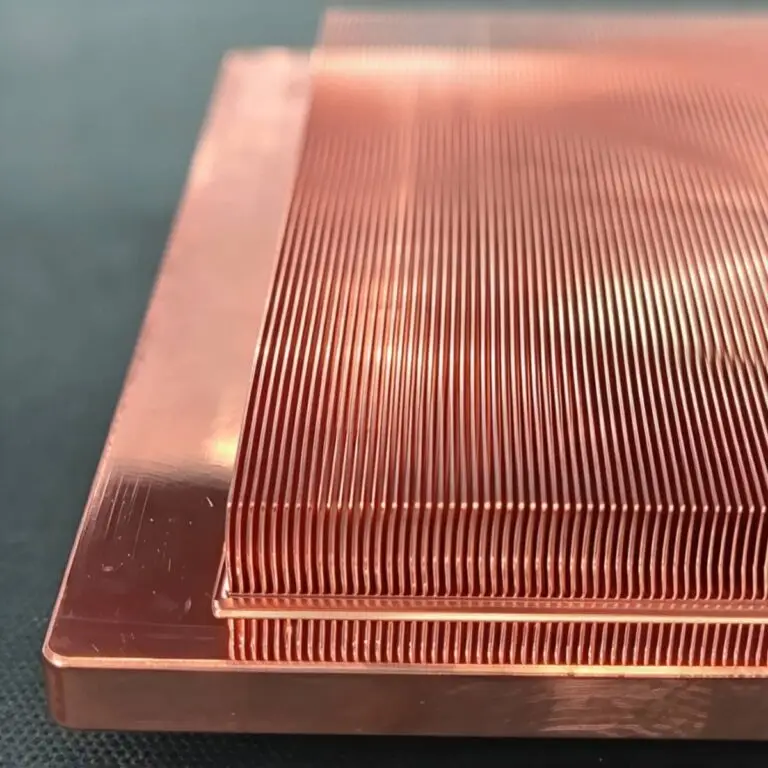
Diamond-Copper Thermally Conductive Composite. High thermal conductivity, tunable CTE, robust.
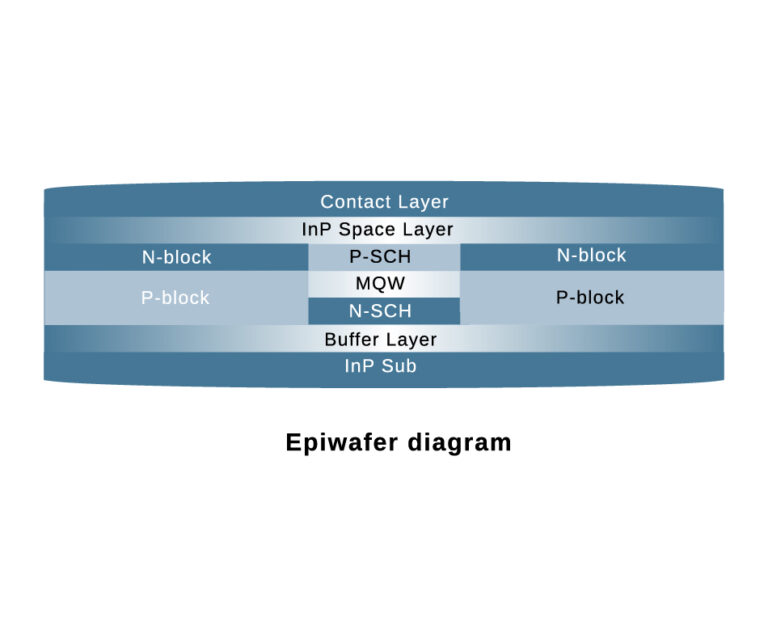
The DE-CW-1310 DFB EPI wafer, a high-performance epitaxial structure designed for distributed feedback (DFB) lasers operating at 1310 nm....
Ceramic thin-filmvacuum sensor Optical gas massflowmeter Liquid mass flowmeter Force sensor MEMS...
Photoelectric sensing chip Light source chips Optical transmission and modulationchips Optical detection and receptionchips...
Using a“Detach Core”which has two-layers carrier foil structure on the surface as a core, and forming...
Tenting process is a kind of subtractive process, the process as follows: Laminating photosensitive film...
Modified Semi-Added Process abbreviated as mSAP, which can be used on the core or build-up layers, pattern...
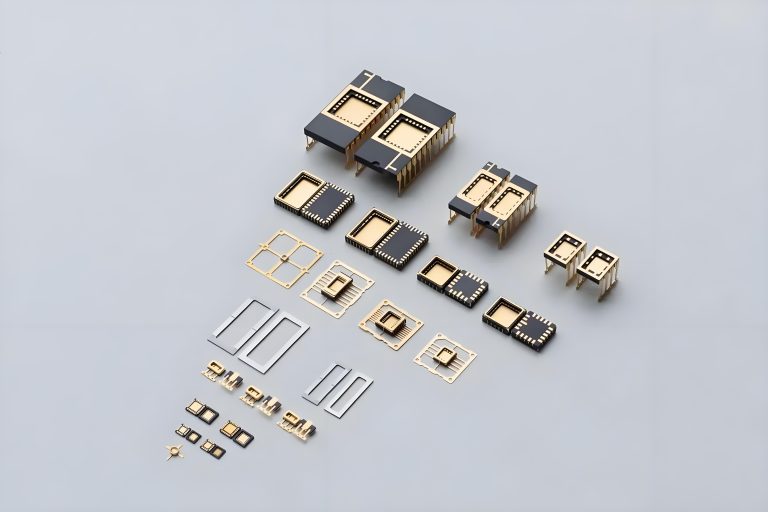
Semi-Added Process abbreviated as SAP, using on the build-up-layer pattern forming as follow:First depositing...
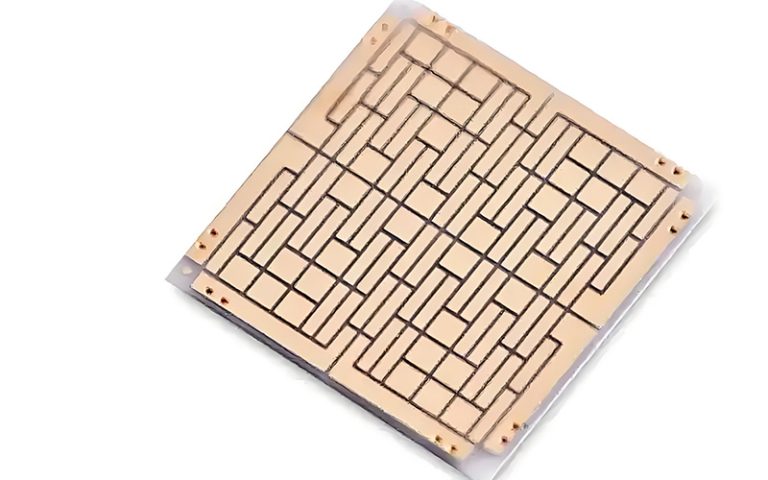
The product generally adopts the pressing lamination process of semi-curing sheets , and line formation...
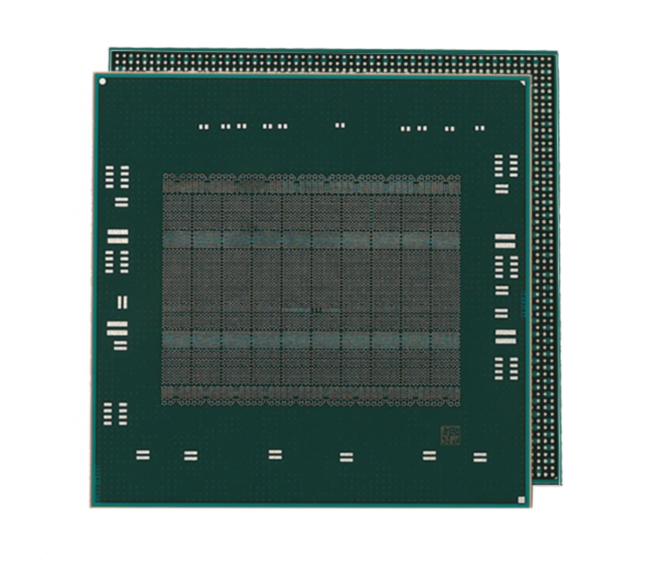
The products generally adopt the Build-up Film Lamination process, and the circuit formation uses the...