

An liquid-cooled optical transceiver selection can look straightforward until the rack drawing meets the tank layout. The port may accept the module, yet the cable could cross a wet-to-dry boundary or leave too little room to release it. The rate printed on a 400G or 800G part answers one question; it says nothing about those installation details.
Make sure to include the exact product code of the part in question as well as the coolant used and the respective operating conditions for this part in your query for compatibility confirmation. Also, include the respective seals and materials that are exposed in the area where the part will be installed. Additionally, please indicate how the part is to be removed from the tank. Just because a part fits in a cage does not necessarily mean it is suited for a certain tank.
DEEPETCH‘s data-center and HPC range covers optical transceivers and active optical cables from 10G to 800G, with OSFP, QSFP-DD, and QSFP112 options. The 800G range also includes AOC and DAC assemblies. The DEEPETCH optical interconnect portfolio can help narrow the format; the host-port drawing and tank boundary still need to be checked against the chosen part. Confirm coolant suitability separately.

Draw the tank boundary. Note which of your equipment/cables will be submerged, where on the tank wall your route crosses, and which of your connectors will remain dry. If you don’t have a shared drawing of the tank boundary, engineering will only review the module you handed in and procurement will be pricing a larger assembly than you needed.
The coolant and tank inspection should be carried out for all exposed surfaces and connections on the item, i.e. module body, fiber tail, connector, jacket, seal and strain relief. An item which is OK in a rack of air-cooled modules is not OK for immersion.
This check should be part of the engineering sign-off for an immersion-cooled data center optical transceiver before the procurement part number is fixed.
Rehearse a service task against the drawing. Can the same technician reach the release tab to remove a module and then inspect the connector for a fault without having to move other nearby tank hardware? Hot-plug support and diagnostics are of little use if there is no physical way to reach the part.
The routing should be finalized before the mechanical layout is “frozen” to ensure that a cable that can fit the electrical requirements does not come into contact with the surrounding cage or impacts a compute node. Include the bend radius, cable exit direction, connector dimensioning and the wet-to-dry transition through.
By “Module” does one mean cable, or a larger tank side assembly. State your RFQ requirement so that bidders understand exactly what they are to quote for.
Note to selection criteria: if the transceiver will be submerged, then list the host form factor, optical interface, coolant, operating conditions, and removal method on the selection criteria. Check the cage and port arrangement for DEEPETCH OSFP, QSFP-DD, and QSFP112 families but a family label does not imply immersion approval.
An AOC is a fixed optical ends and cable assembly, often used for point-to-point connections that have fixed end points. DEEPETCH AOC models are comparable once the connector end face interfaces match. Even so, we must check the portion of the AOC that will be exposed to coolant for the specific jacket and ends termination.
For an immersion-cooled optical module to be used in an AI data center, a host-port check and a check of the boundary between the coolant and the optical module’s case are required for a compatibility check. A simple speed up is not such a check.
Installation typically consists of a cooled optical assembly within the tank, and conventional optical or copper links outside of the tank. The boundary of the tank installation should be clearly indicated on the installation drawing, with details of connector transitions, patch points, cable support, etc. Also include details of how the tank side component is to be replaced.
The part must be compared against the rack on which it is intended to operate. A specification of a part consists of more than a headline specification. Important questions are: Is the part reachable? Can the readings be monitored? How is the part to be replaced?
DEEPETCH product families cover 10G to 800G applications. For the exact model, match Ethernet or InfiniBand use, host port, lane arrangement, aggregate rate, breakout, and management interface before requesting a quote.
An 800G ‘marking’ on a cable is merely an aggregate bandwidth rating and does not prove that the full end-to-end data path functions correctly. This requires verification of the switch, adapter, firmware, optical interface and cabling. Changes to a host platform can affect issues such as cage clearance and thermal load, so these approval assumptions should be re-verified rather than simply approved for the old configuration.
When choosing between OSFP, QSFP-DD and QSFP112 modules, note that they connect to different host interfaces. Use your eyes to verify the cage before you mount the surrounding pieces of hardware, and make sure the plug and cable can clear the tank cover. Even a compatible module may become stuck after surrounding pieces of hardware are mounted.
Take measurements for the route of the fiber, including slack, tank penetrations, patch panels and cross-connects. Don’t mistake the straight line between two devices with the link length. DEEPETCH 800G AOC is offered in 850 nm VCSEL and PIN flavors, while the 400G/800G range covers MPO and LC connector options. Verify the exact part number for reach and connectors prior to release of the drawing.
Check out the rest of the high-speed optic solutions for data centers. Log the selected fiber type, end connectors, maximum length and minimum bend radius for this route on the project drawing.
For a liquid-cooled optical transceiver, use the selected part’s power at the intended operating condition in the thermal calculation; a family average can conceal a relevant difference. An AOC review should include both active ends and the full route.
Agree to retain product-level power figure using the approved part number. If supplier has not provided figure for intended operation, clarify before approving as opposed to making something up.
Most DEEPETCH optical products provide digital diagnostics via the I2C interface. The operating team then has to decide which measurement values are to be recorded within the monitoring system and who is called in case of an alarm. In addition, the interface must not become less clear with respect to fault handling.
Please list steps for isolating a fault on the liquid-cooled AOC for HPC that should be included in the operating plan for such systems, ideally without having to move nearby tank-side connections.
Review host-board requirements for 800G optical module integration and review qualification test plan for the switch or server under test.
Before approving the part for a production tank, clarify the following points which could undo the part selection:
A factory-terminated AOC can eliminate some of the field-connection work when the endpoints and route are fixed. The benefits of such a pre-assembled unit can only be realized after the exact assembly has been confirmed for the coolant in question and the respective service conditions.
Even if some of the ports are to be moved or the fiber needs to be replaced by the technicians differently from the rest of the module a pluggable design offers more flexibility for maintenance. Compare this to the DEEPETCH AOC families and verify immersion suitability for the part in question.
Make the fixed-route or field-replacement preference for a liquid-cooled optical link RFQ clear in the RFQ so that the assemblies to be compared are known.
Whether to run a fixed assembly or allow the module and fiber to be changed individually after commissioning, depends on the service requirements.
An RFQ for a liquid-cooled optical transceiver should identify the host, form factor, rate, protocol, reach, connector, fiber, coolant, operating temperature, power limit, diagnostic needs, and tank boundary. Specify whether the requested item is a pluggable module, fixed AOC, or complete assembly; otherwise suppliers may return unlike configurations.
Specify the required host interface in the liquid-cooled optical link RFQ. If your design uses an immersion cooled OSFP optical transceiver then state OSFP rather than leave the cage size open to interpretation.
DEEPETCH needs to be sent the host-port drawing, tank boundary, cable route and service steps. Request the exact product code and interface required, as well as operating conditions, coolant compatibility etc and any platform specific information required for qualification.

Liquid-cooled optical transceivers can be approved for fixed routes after all relevant criteria such as product code, host interface, route, power condition, diagnostic plan, exposed materials and service path have been reviewed and agreed. DEEPETCH AOC models are suitable for fixed routes whereas the pluggable families are designed for port level changes. Neither form factor obviates the need to confirm the coolant.
An OSFP optical transceiver for immersion cooling still needs part-specific confirmation of the coolant to use. Identifying the host OSFP format is a separate question from compatibility with a given liquid.
Mark any tank layout, host port or route that was left open in the RFQ as unresolved. It may satisfy the rate, but then it’s missing a critical installation parameter.
If any of the port type, rate, route length, coolant, connectors or service plan details have not been finalized, please include these in the DEEPETCH contact page and we will be able to identify what still needs to be confirmed for your selection.
The 800G label alone does not confirm a module is suitable for a tank. The materials of the module, the seals, the connector, the thermal conditions as well as the removal method all need to be reviewed for a specific tank. The review of the module and the cable path to the module needs to be done together.
An immersion-cooled data center optical transceiver must be approved for use by verifying tank compatibility and verifying removal by a technician.
An AOC should be selected for a fixed endpoint-to-endpoint connection, while a pluggable module is chosen when connections have changing ports or individual fibers must be replaced. Verify that the exact part number for the cooler has been selected for an immersion rack connection.
Distinguishing between the two can be important when selecting an immersion-cooled optical module for an AI data center expansion installation, where the host may be changed in the future.
Please provide host form factor, lane/aggregate rate, protocol, reach, connector, fiber, coolant, operating conditions, power limit, tank boundary and replacement procedure information. This will enable the supplier to identify a suitable candidate for the remaining platform checks.
This type of liquid-cooled AOC for HPC should be requested with the fixed cable route and diagnostic handling included within the original request.
The Diamond Heat Spreader is a highly efficient thermal management material engineered for the most demanding...
Molybdenum copper composite: adjustable CTE, high conductivity, lower density than tungsten copper. No...
Tungsten copper composite: low CTE, high conductivity. Ideal for RF, power, optical packaging.
Diamond-Copper Thermally Conductive Composite. High thermal conductivity, tunable CTE, robust.
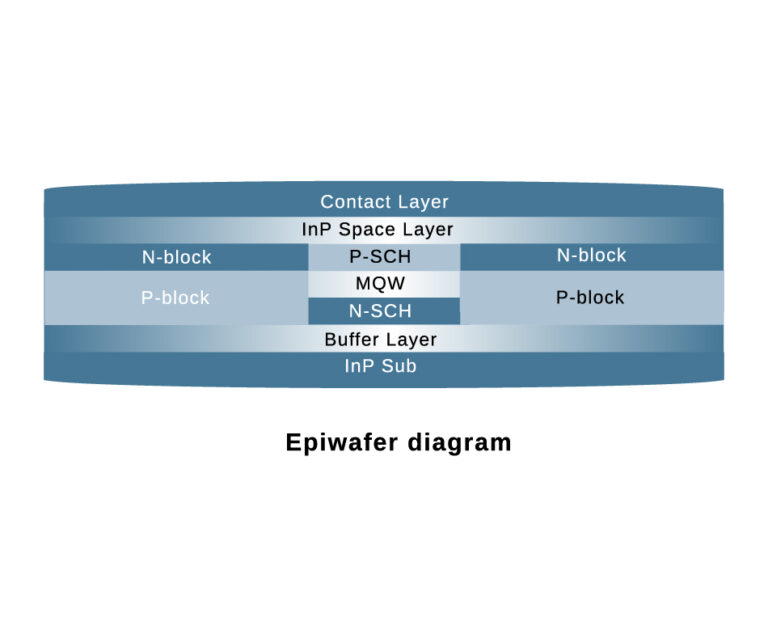
The DE-CW-1310 DFB EPI wafer, a high-performance epitaxial structure designed for distributed feedback (DFB) lasers operating at 1310 nm....
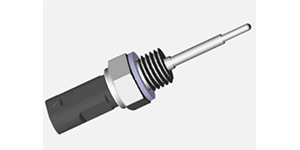
Ceramic thin-filmvacuum sensor Optical gas massflowmeter Liquid mass flowmeter Force sensor MEMS...
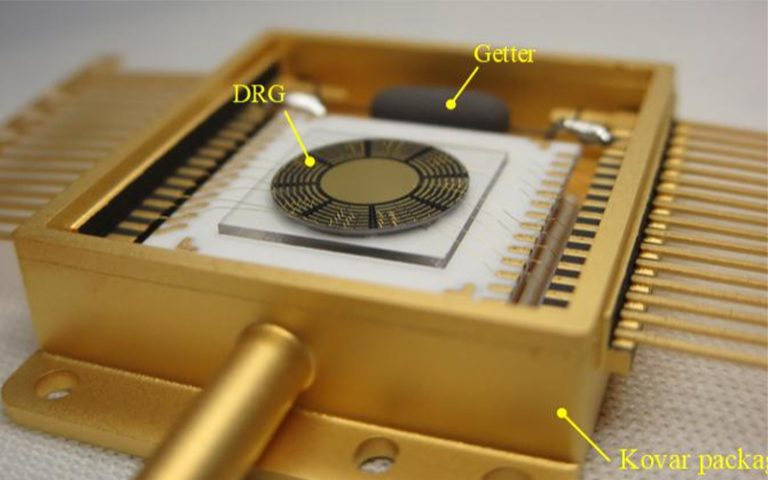
Photoelectric sensing chip Light source chips Optical transmission and modulationchips Optical detection and receptionchips...
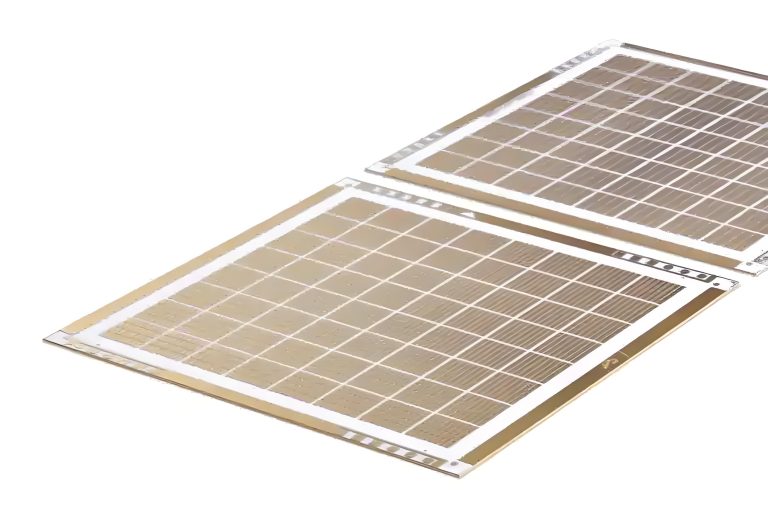
Using a“Detach Core”which has two-layers carrier foil structure on the surface as a core, and forming...
Tenting process is a kind of subtractive process, the process as follows: Laminating photosensitive film...
Modified Semi-Added Process abbreviated as mSAP, which can be used on the core or build-up layers, pattern...