

“Molybdenum copper vs tungsten copper” sounds like a choice between two fixed materials. In practice, the names cover whole families. Changing the copper share changes the result inside either family. A buyer who asks only for “MoCu” or “WCu” may receive quotes for grades that were never technically comparable. DEEPETCH supplies both composite families for semiconductor thermal management. Begin with the package: its CTE window, heat path, mass limit and joining route.
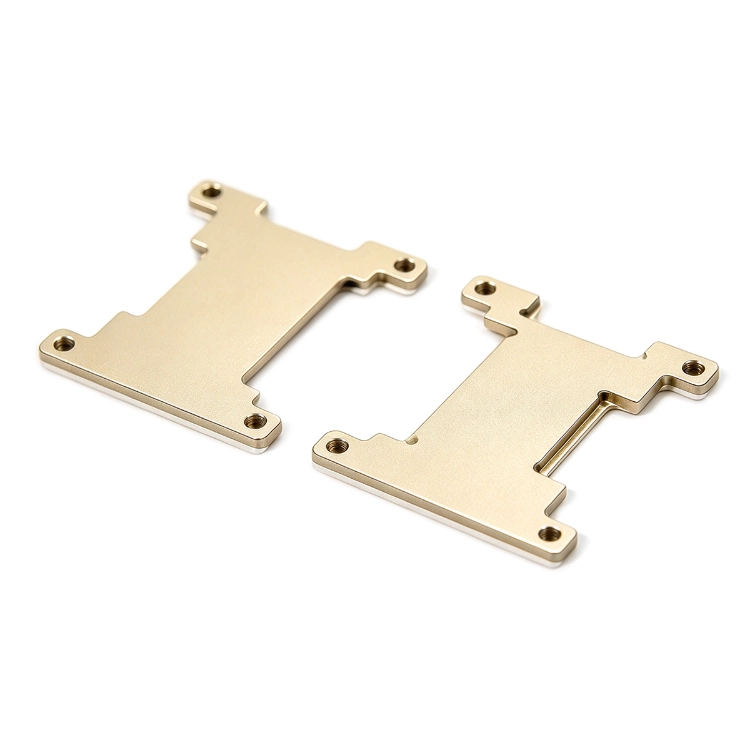
Put the die, ceramic, attach layer and frame on the same section drawing. Which interface is most likely to see stress during heating? Where does heat enter the base plate? Those answers set the useful comparison. A low CTE is not automatically better if another part of the stack needs a different balance.
In these composites, copper carries much of the heat. The refractory metal pulls expansion in another direction and changes the part mechanically. Adjust the copper share and both conductivity and CTE tend to move. A CTE matched heat spreader therefore cannot be selected from one column alone.
Write the acceptable expansion range first. Compare only the grades that fall inside it. The device now sets the boundaries for the molybdenum copper vs tungsten copper review; a large data-sheet number no longer drives the shortlist by itself.
The density difference is substantial enough to check before detailed modelling. DEEPETCH lists MoCu grades at roughly 9.5–10.0 g/cm³; the WCu grades shown span about 12.2–17.0 g/cm³. Convert those values into finished-part mass using the current drawing. A density comparison on its own says little about the load at assembly level.
For a fixed laboratory package, the difference may be unimportant. In airborne electronics or a moving assembly, it may remove a WCu heat spreader from consideration. The same calculation may show that mass is irrelevant and allow the team to focus on thermal and joining requirements.
One arbitrary MoCu grade beside one arbitrary WCu grade proves little. Pair candidates by the expansion range accepted by the package. Only then compare heat flow, density and manufacturing route.
| Example DEEPETCH grade | Listed CTE | Listed thermal conductivity | Listed density |
| Mo85Cu15 | 6.0–7.0 ppm/K | ≥140 W/(m·K) | 10.0 ± 0.2 g/cm³ |
| Mo70Cu30 | 6.7–8.2 ppm/K | ≥170 W/(m·K) | 9.7 ± 0.2 g/cm³ |
| W90Cu10 | 6.0–7.0 ppm/K | ≥170 W/(m·K) | 17.0 ± 0.3 g/cm³ |
| W80Cu20 | 7.4–8.9 ppm/K | ≥210 W/(m·K) | 15.6 ± 0.3 g/cm³ |
The DEEPETCH Molybdenum Copper Composite page begins at Mo85Cu15 and continues through Mo50Cu50. Read across the series and a trade-off appears: minimum thermal conductivity moves from 140 to 200 W/(m·K), while CTE moves upward too.
A MoCu heat spreader can be useful where lower density matters or where rolled plate and stamping suit the production route. DEEPETCH lists rolled MoCu plate for stamping, plus semi-finished and finished parts with Ni/Au coating. The quote should say which delivery state is included.
The DEEPETCH Tungsten Copper Composite range covers W90Cu10 through W50Cu50 and includes low-expansion variants. Conductivity and CTE change with composition here as well. “WCu heat spreader” is therefore a category, not a controlled grade.

WCu offers higher listed conductivity at several comparable CTE ranges, but it also carries more mass. That may be acceptable for an RF base or power package. It should still appear in the mechanical review rather than being discovered after the semiconductor base plate material has been chosen.
The table is suitable for screening. A purchase order needs more. State the grade and identify which property is a minimum, range or tolerance. Check the temperature basis used for CTE and the unit attached to every figure.
Both DEEPETCH product ranges list relative density at 99% or above and state that Fe and Co sintering activation elements are not added. If either item matters to the device process, move it into the controlled requirement. A web page or email is not an acceptance document.
Now open the specification beside the supplier offer. Has Mo70Cu30 become “equivalent MoCu”? Perhaps W80Cu20 has been changed to a higher-copper grade. Either proposal might work. The technical owner still needs to check expansion, heat flow and mass before purchasing accepts it as the same semiconductor base plate material.
Receiving must be able to connect the tested material to the parts in the box. Agree on grade name, lot identity and reported fields before shipment. Extra certificate pages add nothing when the CTE matched heat spreader cannot be traced back to its composition.
At the same time, find out what the conductivity entry means. Is it a minimum, a nominal figure or an actual test result? Record the answer. It will matter during offer comparison and again if receiving questions a later lot.
Two candidates may both fit the thermal model, yet only one may fit the line. How will the blank be formed, machined, coated and joined? Those operations belong in the part definition, not in a discussion held after material release.
DEEPETCH lists Ni/Au for semi-finished or finished MoCu parts. For WCu, the available list includes Ni, Pd, Au, Ag and Cu. The application does not need every finish. Select the stack for the actual bond, braze or solder operation; then show coverage and masking on the drawing.
A MoCu heat spreader supplied as rolled plate is a different purchase from a finished component. The same is true of a coated WCu heat spreader and a raw blank. Make the delivery state visible beside quantity and drawing revision.
Put outline and thickness on the controlled drawing, along with flatness, finish and datums. DEEPETCH notes size control, surface finish and flatness for WCu. The buyer must still supply limits that come from the package. Receiving cannot inspect the word “good.”
When reviewing molybdenum copper vs tungsten copper quotes, settle package fit first. CTE comes next, followed by conductivity, finished mass and the manufacturing route. Commercial terms make sense after those fields match. Looking at price too early can hide a changed grade or delivery state.
For a molybdenum copper vs tungsten copper comparison with an unsettled CTE window or surface stack, send the package drawing and joining method when you contact the DEEPETCH team. Add a mass limit where the assembly has one. The discussion can then stay inside real package boundaries rather than depend on guesses about the device.
No. The answer depends on composition and specification. DEEPETCH lists higher values for several WCu grades, but buyers should compare grades that meet the same package CTE and geometry rather than compare family names.
MoCu has the lower listed density across these DEEPETCH ranges. The actual saving depends on finished volume, so use the controlled drawing to calculate part mass.
Include the exact grade or required composition, CTE window, minimum conductivity, mass limit, dimensions, tolerances, surface coating, joining process, quantity and certificate fields. Attach the current package drawing where it controls fit or datum locations.

The SCH Series is a high-performance DAF/DDAF (Die Attach Film) designed to streamline and enhance the advanced packaging process....

The DEEPETCH DP-QPA2611 is a high-performance X-Band (8–12 GHz) Gallium Nitride (GaN) Power Amplifier...

The DEEPETCH DP-ROS-40121 is a premium, solvent-free epoxy die attach adhesive engineered for the most...
The Diamond Heat Spreader is a highly efficient thermal management material engineered for the most demanding...
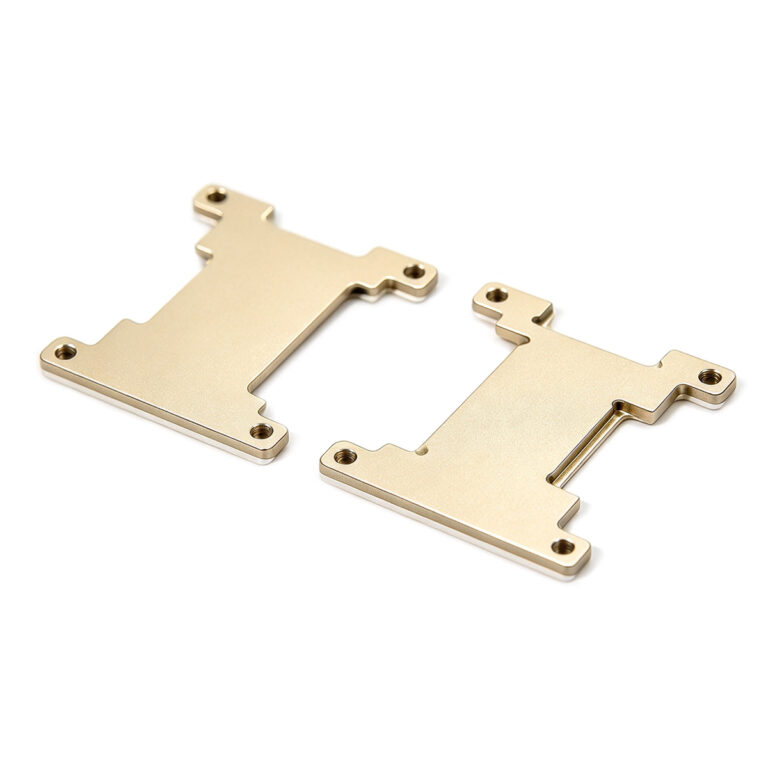
Molybdenum copper composite: adjustable CTE, high conductivity, lower density than tungsten copper. No...
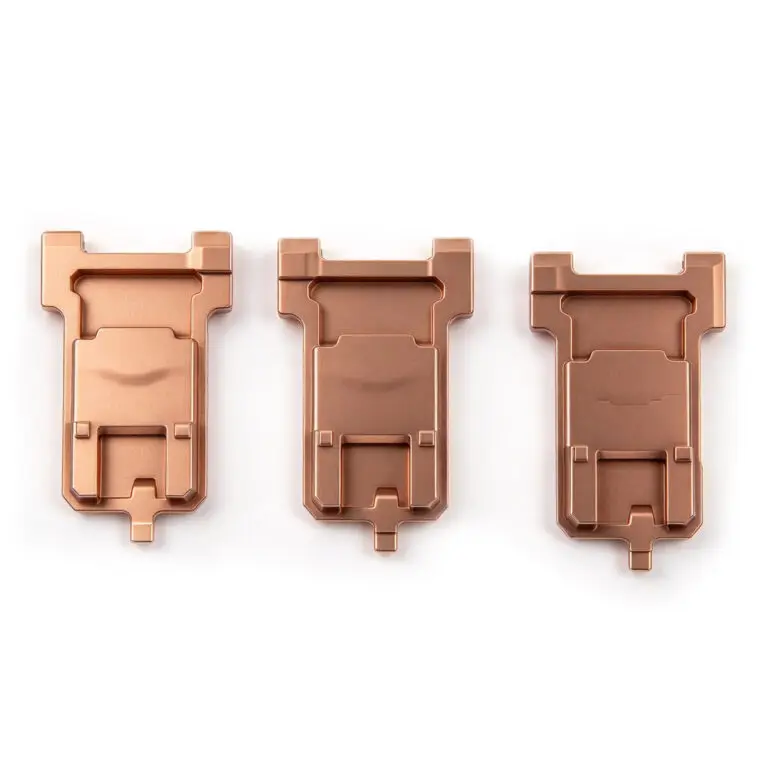
Tungsten copper composite: low CTE, high conductivity. Ideal for RF, power, optical packaging.
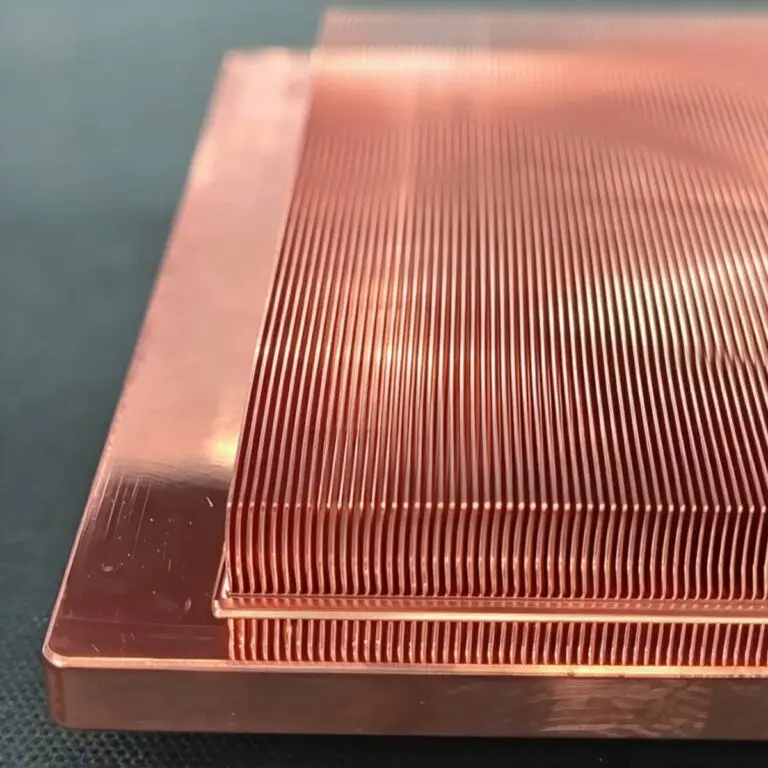
Diamond-Copper Thermally Conductive Composite. High thermal conductivity, tunable CTE, robust.
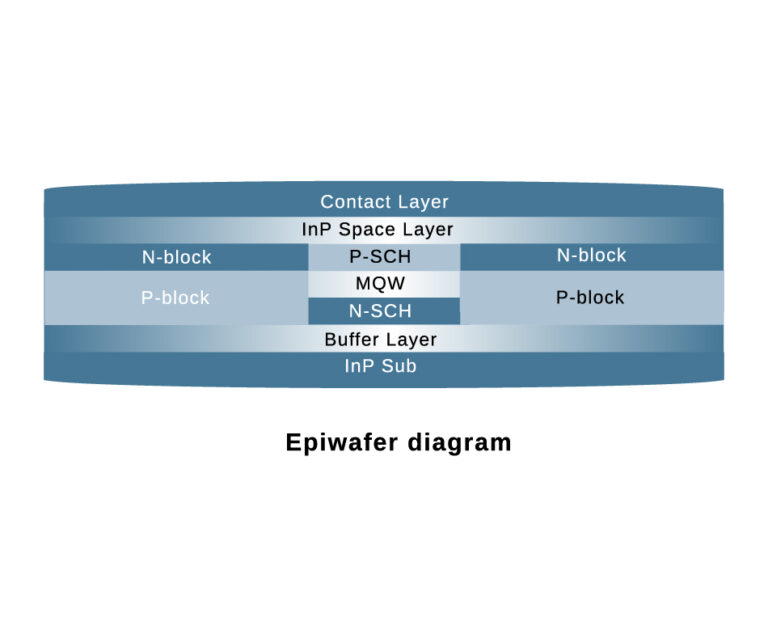
The DE-CW-1310 DFB EPI wafer, a high-performance epitaxial structure designed for distributed feedback (DFB) lasers operating at 1310 nm....
Ceramic thin-filmvacuum sensor Optical gas massflowmeter Liquid mass flowmeter Force sensor MEMS...
Photoelectric sensing chip Light source chips Optical transmission and modulationchips Optical detection and receptionchips...