

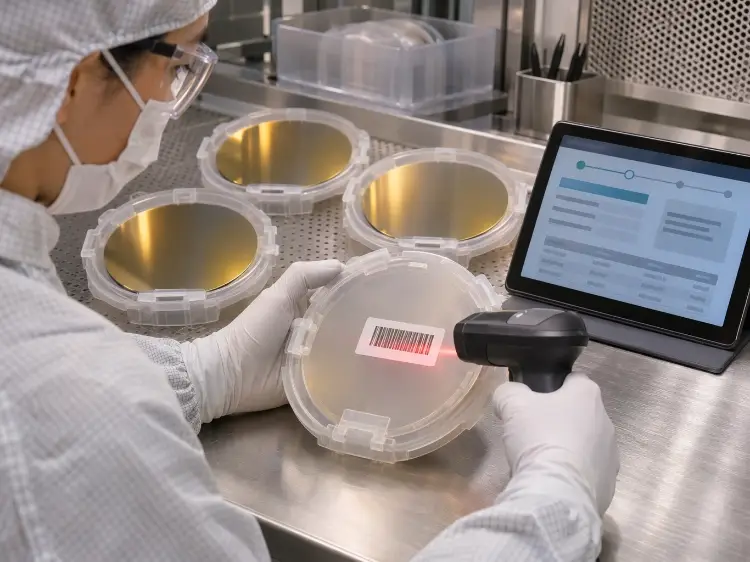
The material whose lot is being traced is described on the indium phosphide product page.
The identity of a lot is the set of facts so recorded that any article made from the lot may be traced back to the material of which it was made, and to what was done to it.
The record states the ordered condition of the material, the orientation, the doping, the polish and the finish, and not only the name of the material, because two wafers of the same material may differ in all of these. The maker’s lot number, the date of receipt and the quantity are written beside the ordered condition, and the documents that came with the lot are filed with it. Where the material is ordered to a specification, the revision of that specification is written upon the record. The material that the traceability record is written around is supplied by DEEPETCH SEMICON.
The face of the wafer and the flat or notch that marks its crystal direction are recorded at receipt and preserved at every step, because a wafer that is turned or reversed loses its identity and cannot be re-identified except by test. The manner in which the orientation is marked upon the carrier or the box is written down, and the same manner is kept at every move. A wafer whose orientation is in doubt is set apart until it has been tested, and is not taken into the line upon supposition. The carrier that travels with the lot is described in the note on compound semiconductor wafer carrier trays.
A lot number is given to a quantity of material that is processed together from the beginning to the end, and it is not divided without the division being recorded. When two lots are merged, they are merged only if they are of the same material and the same history, and the new number refers to both old ones.
The result of incoming inspection is filed against the wafer to which it belongs, and not against the order or the carton, so that a question about one wafer may be answered. The wafer number, the inspection made, the result and the date are entered upon one line, and the instrument used is written beside the result. Where a wafer is rejected, the reason is written as a measurement or an observation, and not as a word alone.
The reading of the mark is written down.
The history of the lot is written at the time of the event, by the person who performed it or was present at it. A history written from memory at the end of the shift is not a history. Each entry states what was done, the date and time, the person, the machine or the bench, and the conditions that were measured, and refers to the process specification and its revision. The entry is signed or initialled, and a correction is made by a line through the wrong words and the right words written beside, with the initials of the corrector. Erasure and overwriting are not permitted.
The cleaning and the storage of the wafer are entered in the same record as the receipt, because the condition of the material at the moment of use is what the fabrication requires. The treatment, the time, the material of the container and the place of storage are written beside the wafer number. Where a wafer is kept over a period, the length of the period is entered, since the surface of a wafer may change in store.
The record is kept so that an article may be traced from its number to the lot, from the lot to the wafers, and from the wafers to the record of receipt and of every treatment, and backward by the same path. Where an article is made from more than one lot, every lot is recorded. Where a lot is partly used, the remainder is recorded with the quantity that remains.
The identity of a lot ends only when the lot is consumed or rejected, and the record states which.
A record is made at every step, and each record is kept with the lot.

The identity of the lot is carried into the growth of the epitaxial layer and into the fabrication of the devices, so that a device may be traced to the wafer and the lot. The growth is entered against the wafer, and the device is entered against the position upon the wafer from which it was cut, since a fault may lie in one part of a wafer and not in another. Where a wafer is cut into pieces, the number and the position of each piece are written against the wafer.
The record of a lot is the history of the lot and the statement of its present condition.
The results of device test are used to test the trace chain itself, because a chain that cannot join a device to its lot is of no use when a question arises. A device that fails is followed back through the record to its wafer, its lot and its receipt, and the manner in which the record carries the reader from one to the other is examined. A break in the chain is entered as a fault of the record, and is closed by the same means as any other fault.
The record is handed over as one package that joins the receipt, the inspection, the processing and the test of the lot, so that a person who receives it may follow an article from the maker to the device. The package carries the identity of the lot, the ordered condition, the wafers and their numbers, the processing by wafer, and the results of test. Where a question cannot be answered from the package, the maker or the party that holds the missing part of the record is named.
The entry of a clause is a word or a number that stands in a fixed place in the record, and is written before the operation begins. Where a clause does not apply to the lot, it is entered as not applicable, and not left empty, since an empty place cannot be distinguished from an oversight. Where the condition that the clause states has been measured, the measured value is entered beside the clause. The entry states the condition at the time, and not the condition that was intended.
The authority on standards recommends means for ensuring the traceability and trustworthiness of manufacturing data, and the record of a lot is made in that spirit. The current thinking on the subject is collected at the semiconductor traceability and provenance workshop. The record itself stands better if it follows the recommendations on trustworthy manufacturing data.
Two wafers of the same material may differ in orientation, doping and finish. The ordered condition is what makes one lot different from another.
The face of the wafer and the flat or notch that marks its crystal direction fix its identity. A wafer turned or reversed loses that identity and cannot be re-identified without test.
Against the wafer to which they belong, not against the order or the carton, so that a question about one wafer can be answered.
Yes. Cleaning and storage change the condition of the material before use, so they are entered in the same record as the receipt.
By using the results of device test to check whether a device can be traced back to its wafer and its lot. A chain that cannot do that is of no use when a question arises.
The record of a lot is made before fabrication, because after fabrication the identity of the material can no longer be recovered from the article alone. What is written at receipt is what makes a later question answerable.

The DEEPETCH UV Debonding Film is a core supporting material engineered for advanced semiconductor wafer...

The SCH Series is a high-performance DAF/DDAF (Die Attach Film) designed to streamline and enhance the advanced packaging process....

The DEEPETCH DP-QPA2611 is a high-performance X-Band (8–12 GHz) Gallium Nitride (GaN) Power Amplifier...

The DEEPETCH DP-ROS-40121 is a premium, solvent-free epoxy die attach adhesive engineered for the most...
The Diamond Heat Spreader is a highly efficient thermal management material engineered for the most demanding...
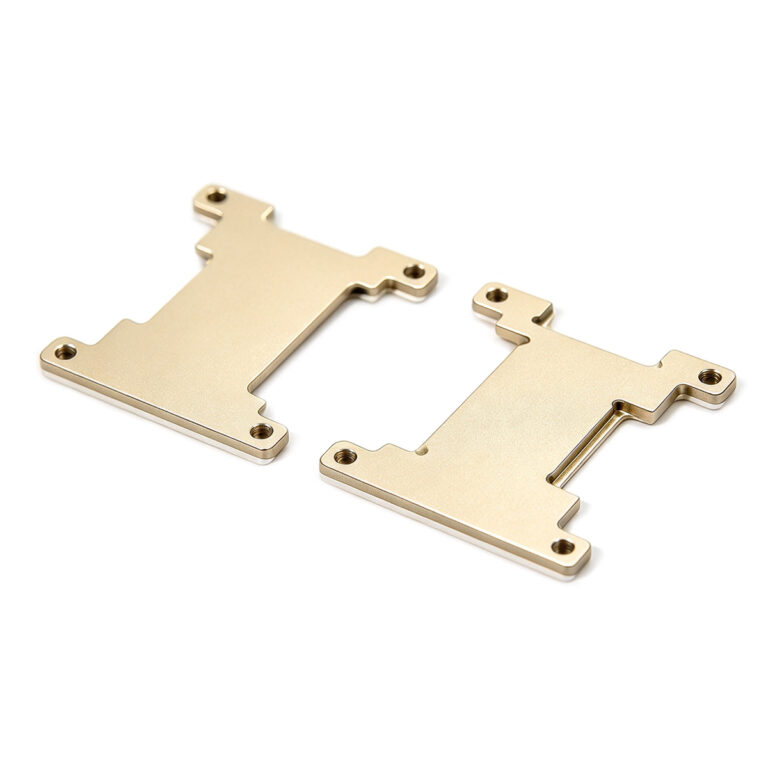
Molybdenum copper composite: adjustable CTE, high conductivity, lower density than tungsten copper. No...
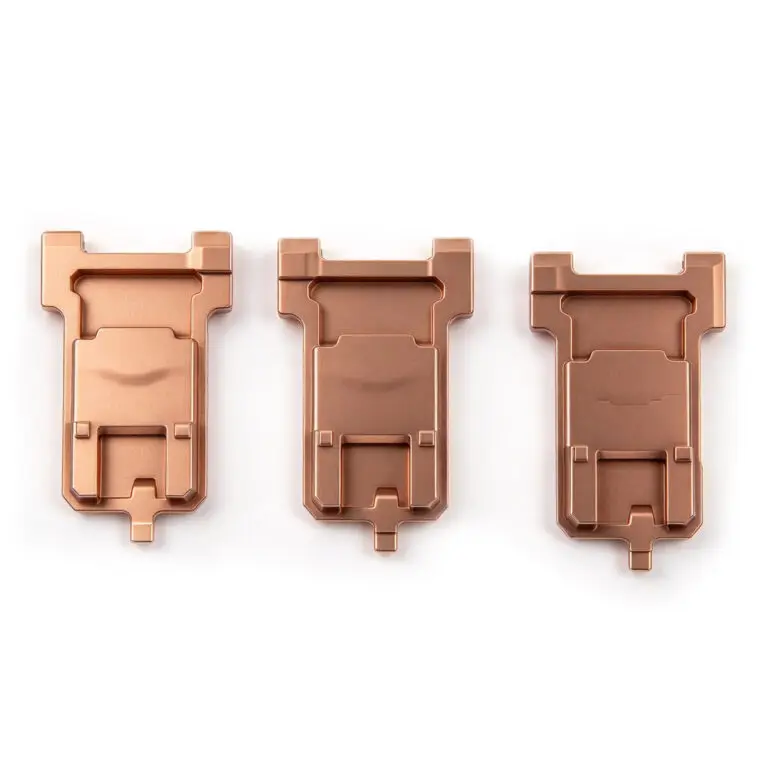
Tungsten copper composite: low CTE, high conductivity. Ideal for RF, power, optical packaging.
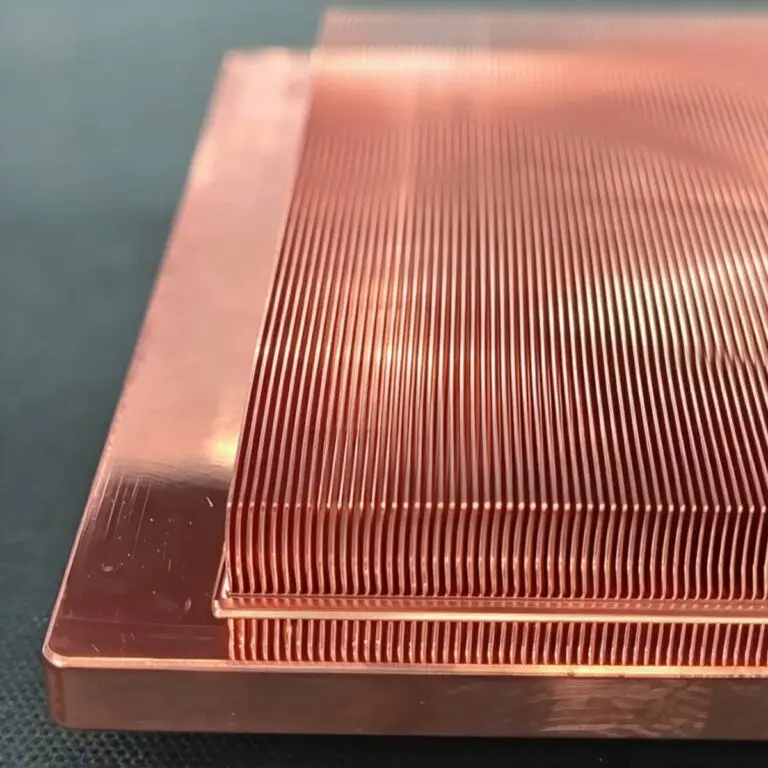
Diamond-Copper Thermally Conductive Composite. High thermal conductivity, tunable CTE, robust.
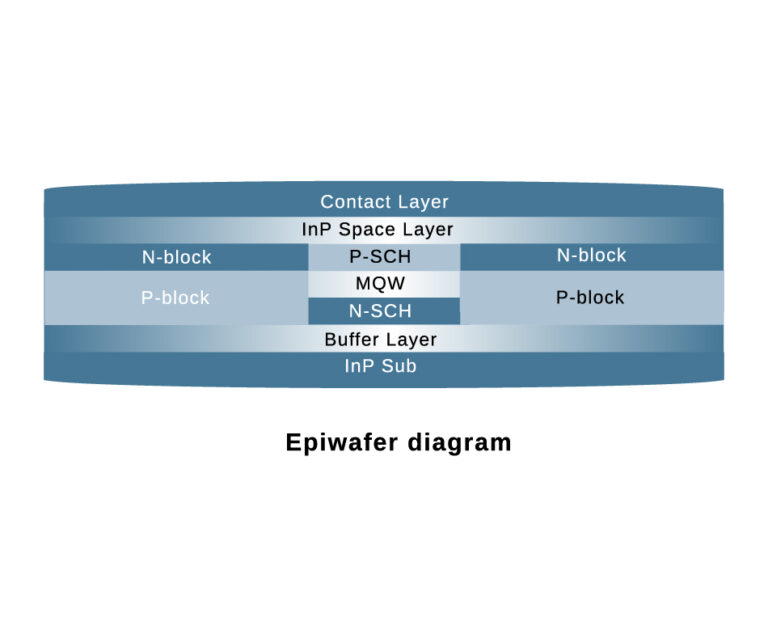
The DE-CW-1310 DFB EPI wafer, a high-performance epitaxial structure designed for distributed feedback (DFB) lasers operating at 1310 nm....
Ceramic thin-filmvacuum sensor Optical gas massflowmeter Liquid mass flowmeter Force sensor MEMS...